
Last week, I spent three hours waiting for a massive open-world game to compile shaders on my buddy’s “high-end” rig. His RTX 4090 sat there like an expensive paperweight while a single CPU core maxed out at 100%. That’s when he asked me about quantum gaming. “Will quantum computers fix this?” he said.
Here’s the thing. Everyone’s talking about quantum gaming like it’s going to drop next Tuesday. The reality is messier, weirder, and way more interesting than the hype suggests.
This guide cuts through the marketing noise. You’ll learn what quantum computers actually do, why they’re not replacing your gaming PC anytime soon, what parts of gaming they might change first, and most importantly, what you should do with your build right now instead of waiting for quantum magic.
I’ve been building PCs for 15 years. I’ve seen every “game-changing” technology promise to fix everything. Some delivered. Most didn’t. Quantum computing sits somewhere in between, and you need to know where.
What Quantum Computers Actually Are (Without the Marketing Nonsense)
Regular computers use bits. Think of bits like light switches: they’re either on (1) or off (0). Your CPU processes billions of these switches every second. It’s fast, but it’s still just flipping switches in sequence.
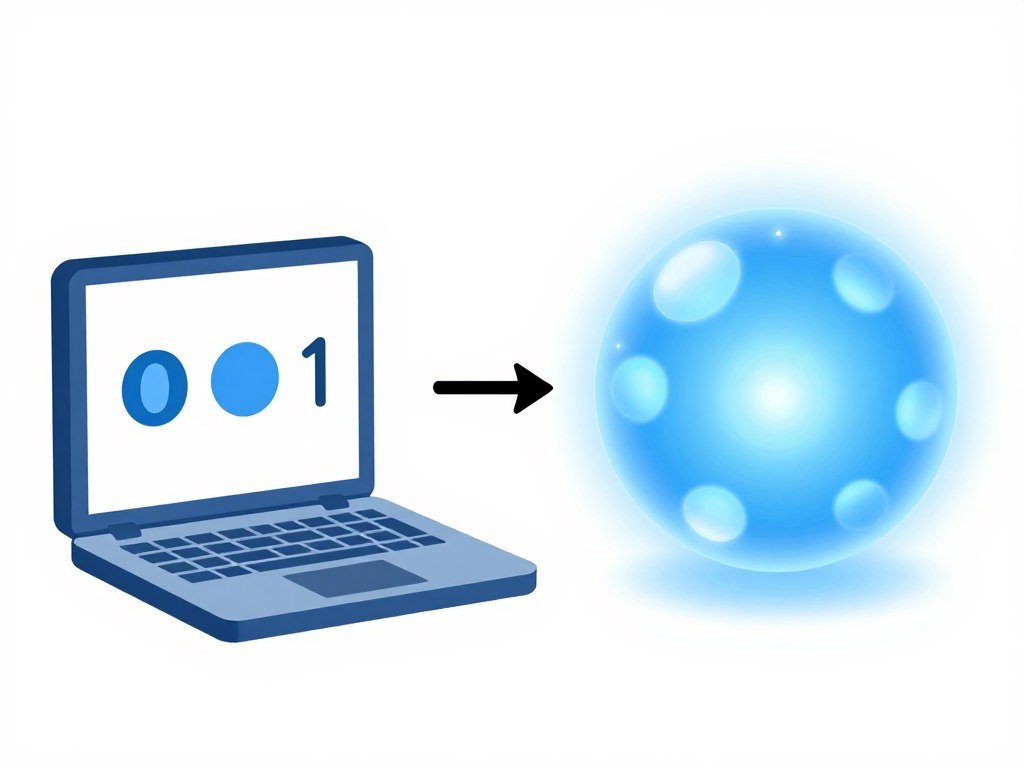
Quantum computers use qubits. Here’s where it gets weird. A qubit can be 0, 1, or both at the same time. It’s called superposition, and it sounds like science fiction, but it’s real physics. IBM quantum computers and other quantum hardware actually exist right now.
The problem? Quantum computers are incredibly fragile. They need to operate near absolute zero. One stray photon can wreck a calculation. And they’re not faster at everything – just specific types of problems.
Where Quantum Actually Beats Classical Computing
Quantum computers excel at a few narrow tasks. They can factor huge numbers quickly, which is why everyone’s worried about encryption. They can simulate molecular interactions, which helps drug discovery. And they can optimize certain algorithms that would take regular computers years.
Notice what’s missing from that list? Running games. Playing Cyberpunk 2077. Processing real-time graphics. Quantum computers are terrible at the things gaming PCs do best.
What Quantum Computers Do Well
- Specific math problems (factoring, optimization)
- Simulating quantum systems
- Certain machine learning algorithms
- Cryptographic calculations
What Classical Computers Do Better
- Everything else
- Graphics processing and rendering
- Sequential logic operations
- General-purpose computing tasks
- Real-time physics calculations
- Running actual game engines
The bottleneck basics you already know about – CPU, GPU, RAM speed – those still matter way more for gaming than any quantum development happening in labs right now.
The Quantum Algorithms That Might Touch Gaming (Eventually)
Let’s talk about where quantum algorithms could actually change games. Not tomorrow. Not next year. But eventually, in specific ways.
Procedural Generation That Actually Makes Sense
Current procedural generation in games uses pseudo-random number generators. They create patterns that look random but follow predictable algorithms. That’s why No Man’s Sky planets start feeling samey after 50 hours.
Quantum computers generate true randomness. Quantum algorithms could create procedural generation that’s genuinely unpredictable. But here’s the catch: you’d still need traditional computers to render and run the game. The quantum computer would just be a fancy random number generator.
Worth building a multimillion-dollar quantum computer for that? Probably not.
AI That Learns While You Play
Machine learning powers enemy AI in modern games. Quantum computers could theoretically run certain machine learning algorithms faster. This means NPCs that adapt to your playstyle in real time.
The reality? Most game AI isn’t limited by computational power. It’s limited by design choices. Developers intentionally dumb down AI so games stay fun. A quantum computer can’t fix that.
Real Talk: The gaming industry already struggles to use the computing power we have. Most games barely touch your GPU’s full potential because optimization is hard and expensive. Adding quantum computers to that mix doesn’t solve the underlying problem.
Physics Simulations at Molecular Level
This is where quantum computers could actually shine in gaming. Imagine simulating water at the molecular level, or fire that behaves according to actual quantum mechanics. The visual fidelity would be insane.
The problem? Your RTX 5090 needs to render the results in real time at 144fps. Quantum computers might calculate the physics, but classical hardware still needs to draw the pictures. We’re back to the same GPU bottleneck issues you face today.
What “Quantum Gaming” Actually Exists Right Now
A few quantum games actually exist. They’re not what you think.
James Wootton’s Quantum Games
James Wootton, a quantum computing researcher, created several games that run on real quantum computers. Games like quantum battleships and quantum puzzle games. They’re designed to teach quantum concepts, not entertain.
These games run on IBM quantum computers through cloud access. You submit your move, wait in a queue, and get results minutes later. Not exactly real-time gaming.
The Quantum Awesomeness Problem
Here’s what researchers call “quantum awesomeness” – the idea that quantum computers will magically make everything better. In reality, quantum games demonstrate quantum concepts. They don’t prove quantum computers will replace gaming hardware.
Think of it like this: you can play chess on a supercomputer, but that doesn’t mean supercomputers are good for gaming. The computational approach matters more than raw power.
Check Your Current Build Instead
While quantum gaming stays in research labs, your rig might have actual bottlenecks killing performance right now. Find out what’s holding your system back.
Real Quantum Computers in Gaming Context
Currently, quantum computers exist in three forms. University research labs have experimental quantum hardware. Companies like IBM quantum offer cloud access to quantum computers with 50-100 qubits. And a few startups are trying to build commercial quantum computers.
None of these quantum computers can run games. They can’t even run a web browser. The gap between “exists in a lab” and “runs games in your bedroom” is enormous.
When Will Quantum Actually Affect Gaming? (The Honest Timeline)
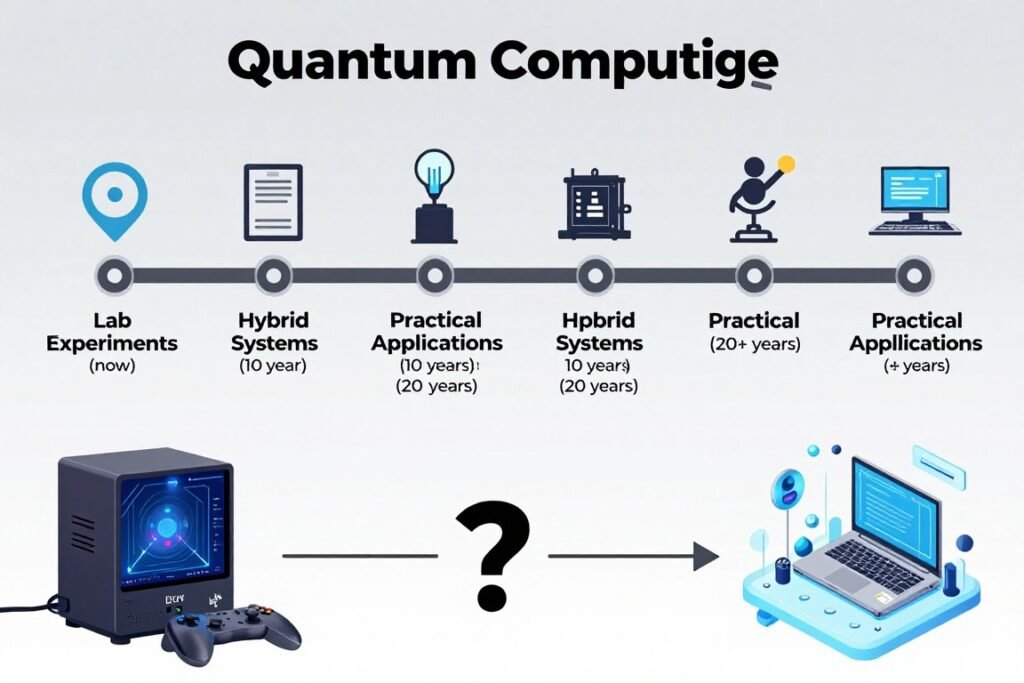
Let’s talk numbers and years. Real estimates from people actually building this technology.
The Next 5 Years: Absolutely Nothing Changes for Gamers
Quantum computers will get more qubits. Researchers will publish papers. Tech companies will make announcements. Your gaming experience won’t change at all.
The quantum computers being built now are research tools. They help scientists understand quantum mechanics. They’re not products. They’re not even prototypes of products.
5-10 Years: Maybe Hybrid Systems
This is where it gets interesting. Some researchers think hybrid systems might emerge. Your game runs on classical hardware like today. But specific calculations get offloaded to quantum processors for things like procedural generation or AI decision-making.
Think of it like how GPUs work now. Your CPU handles game logic. Your GPU handles graphics. A quantum processor might handle optimization problems or complex simulations.
But here’s the thing: we already have specialized processors. Neural processing units (NPUs) handle AI tasks. RTX cores handle ray tracing. Adding quantum processors to the mix requires solving massive engineering problems that have nothing to do with making games more fun.
10-20 Years: Possible Niche Applications
In a decade or two, quantum computers might be stable and cheap enough for specific gaming applications. Not replacing your gaming PC. Enhancing it in narrow ways.
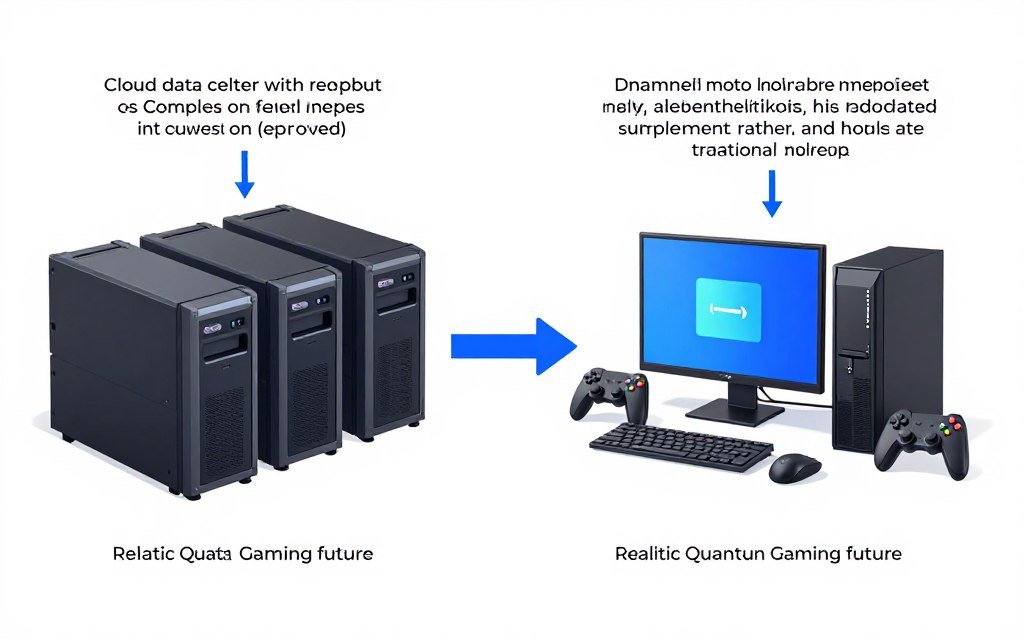
The most likely scenario? Cloud gaming services might use quantum computers on the backend for specific tasks. You’d never interact with quantum hardware directly. Your gaming performance would still depend on your internet connection and the classical hardware rendering frames.
20+ Years: Who Knows?
Predicting technology two decades out is pointless. Twenty years ago, nobody predicted Battle Royale games or 4K 240Hz monitors. The gaming industry will change in ways we can’t imagine.
Will quantum computers be part of that change? Maybe. But they’ll be one technology among many, not a revolution that replaces everything.
Warning: Any company promising “quantum gaming PCs” in the next 5 years is lying. Quantum computers currently cost millions of dollars, require specialized facilities, and can’t run games. Don’t fall for the marketing.
What’s Overhyped vs. What Might Actually Happen
Time to separate the quantum snake oil from actual possibilities.
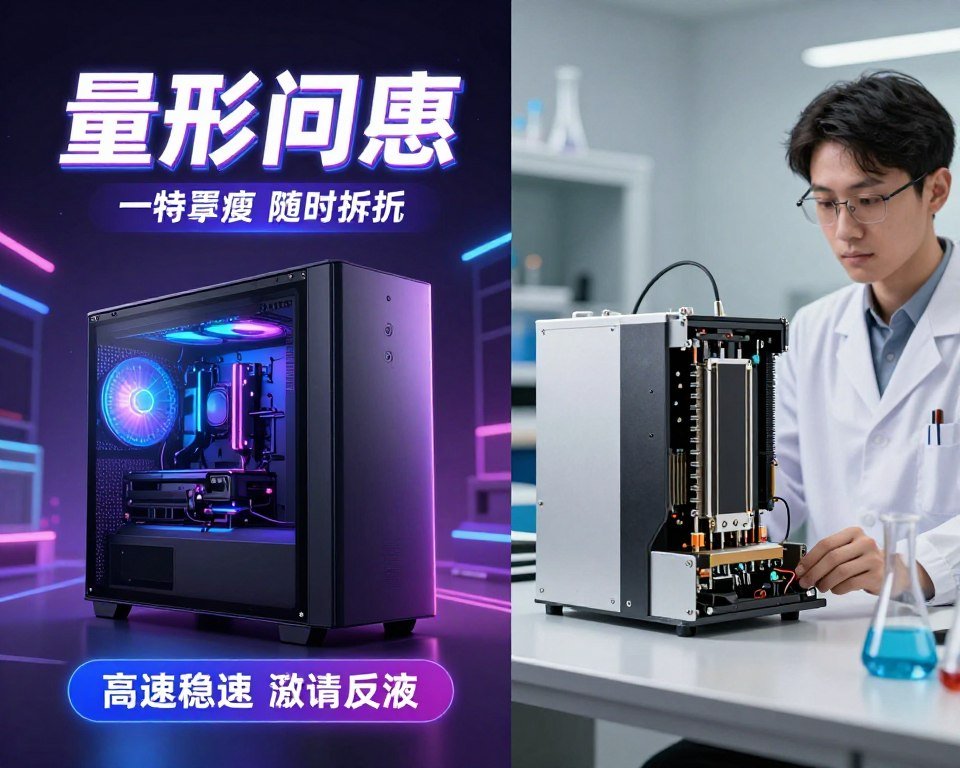
Overhyped: Quantum Gaming PCs
You’re going to see products claiming to be “quantum ready” or using “quantum technology.” It’s marketing garbage. A gaming PC can’t be quantum ready because we don’t know what form quantum gaming will take – or if it will exist at all.
Quantum processors need near-absolute-zero temperatures. Your PC case would need to be a cryogenic chamber. The power requirements would be insane. The cost would be astronomical. It’s not happening in any form that resembles current gaming PCs.
Overhyped: Unlimited Performance
Some articles claim quantum computers will offer unlimited computing power. That’s not how quantum computers work. They’re faster at specific problems. They’re slower or completely unable to solve other problems.
Running a game engine is a general-purpose computing task. Quantum computers are specialized tools. Using a quantum computer to run a game would be like using a Formula 1 car to haul furniture. Wrong tool for the job.
Realistic: Backend Cloud Processing
Gaming companies might use quantum computers in data centers. Epic Games could use quantum algorithms to optimize Unreal Engine’s procedural generation. Valve could use quantum computers to improve Steam’s recommendation algorithm.
You’d never see the quantum computer. You’d just notice games had more varied content or better AI. That’s realistic because it uses quantum computers for what they’re good at while keeping classical computers for what they’re good at.
Realistic: New Game Genres
The most realistic impact? Entirely new types of games that are designed around quantum concepts from the ground up. Puzzle games that teach quantum mechanics. Strategy games where quantum uncertainty is a core mechanic.
These games quantum computers could actually run or enhance. They’d be niche products for education and experimentation, not blockbuster AAA titles.
What’s Actually Possible
- Quantum computers in cloud gaming infrastructure
- Specific optimization tasks offloaded to quantum processors
- Educational games teaching quantum concepts
- Better procedural generation algorithms
- Improved machine learning for game development tools
What’s Pure Hype
- Consumer quantum gaming PCs
- Quantum processors in gaming laptops
- “Quantum ready” hardware marketing
- Quantum computers replacing GPUs
- Immediate performance improvements from quantum technology
The tech insights that matter for your build decisions haven’t changed. Balance your components. Avoid bottlenecks. Optimize for the games you actually play.
If Quantum Gaming Existed, Here’s What Your Rig Would Need
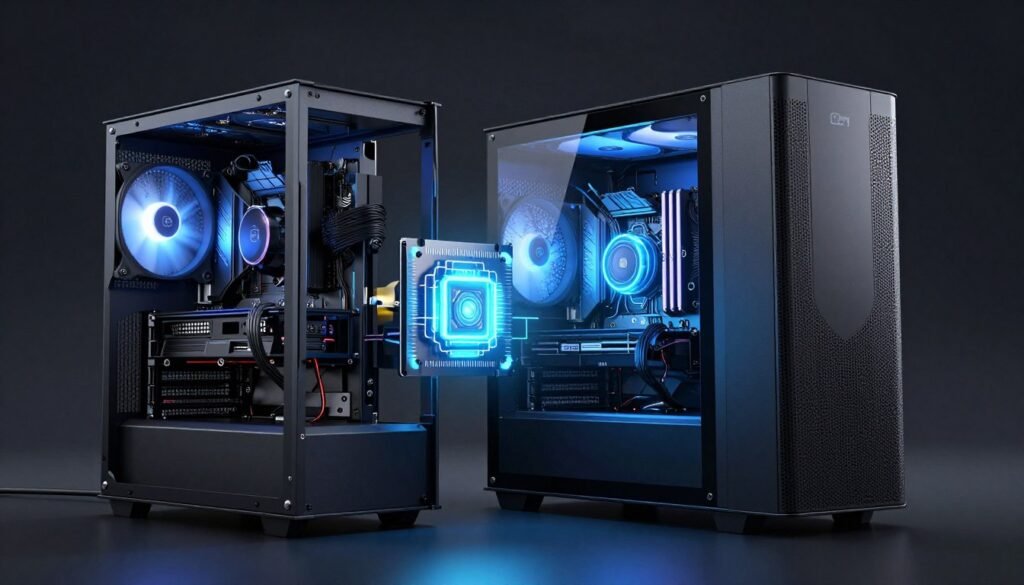
Let’s do a thought experiment. Assume quantum gaming becomes real in some form. What would your PC need?
The Quantum Processor Unit (QPU)
You’d need a quantum processor unit. Think of it like adding a discrete GPU to your system. The QPU would handle quantum calculations while your CPU and GPU handle everything else.
The problem? Current quantum processors are the size of a room. They need dilution refrigerators that cost more than a house. Miniaturizing that technology to fit in a PC case is a materials science problem we’re decades from solving.
Insane Cooling Requirements
Quantum computers operate at 0.015 Kelvin. That’s colder than outer space. Your water cooling loop runs at maybe 40-50°C under load. The gap between those temperatures is the gap between current technology and quantum gaming hardware.
Even if scientists develop higher-temperature quantum computers, “higher temperature” means -200°C instead of -273°C. Still nowhere near the temperatures your current hardware operates at.
Classical Components Still Matter Most
Here’s what people miss. Even in a hybrid quantum-classical gaming system, 90% of the work still happens on classical hardware. Your GPU still renders frames. Your CPU still handles game logic. Your RAM still stores data.
The quantum processor might optimize pathfinding or generate random numbers. But your RTX 5090 equivalent still needs to draw a million triangles per frame. The system balance principles you know don’t change.
Classical Hardware (Still Essential)
- High-end GPU for rendering (RTX 50-series equivalent)
- Fast CPU for game logic (Ryzen 9000-series)
- Sufficient RAM for modern games (32GB+)
- Fast NVMe storage for load times
- Quality power supply for stability
Hypothetical Quantum Add-ons
- Quantum processing unit (QPU)
- Cryogenic cooling system
- Quantum memory (if it exists)
- Specialized quantum API support
- Error correction hardware
How Quantum Might Change Game Development (Not Playing)
Here’s where quantum computers might actually matter for gaming: development, not gameplay.
Better Development Tools
Game developers already use procedural generation tools, physics simulators, and AI systems to build games. Quantum computers could make those tools more powerful.
Example: generating realistic terrain. Current algorithms use noise functions and erosion simulations. A quantum algorithm could simulate actual geological processes at a molecular level. The terrain you play on would be generated by quantum computers, then rendered by classical hardware.
You’d never know quantum computers were involved. The game would just look better.
Optimization Problems
Game engines have massive optimization problems. How do you arrange objects in memory for fastest access? How do you schedule tasks across CPU cores? These are problems quantum computers might solve better than classical algorithms.
Epic might run Unreal Engine optimization on quantum computers in the cloud. The resulting engine runs on your classical hardware. Your gaming experience improves, but you never interact with quantum technology directly.
Machine Learning for Assets
AI-generated textures, models, and animations are becoming common in game development. Quantum computers could potentially run certain machine learning algorithms faster, generating better assets in less time.
Again, the quantum computer is a development tool. The final game runs on classical hardware. Your GPU renders the AI-generated texture the same way it renders hand-painted ones.
Key Point: Quantum computers are more likely to change how games are made than how games are played. The impact on gamers will be indirect – better content, more variety, improved AI – but the hardware in your case will still be classical computers.
This is similar to how UE5 performance depends more on optimization decisions made by developers than raw hardware specs. Better tools make better games, regardless of the computing technology involved.
What You Should Actually Do About Quantum Gaming (Spoiler: Focus on Today)
Let’s get practical. You’re building or upgrading a gaming PC. How should quantum computing affect your decisions?
The Short Answer: It Shouldn’t
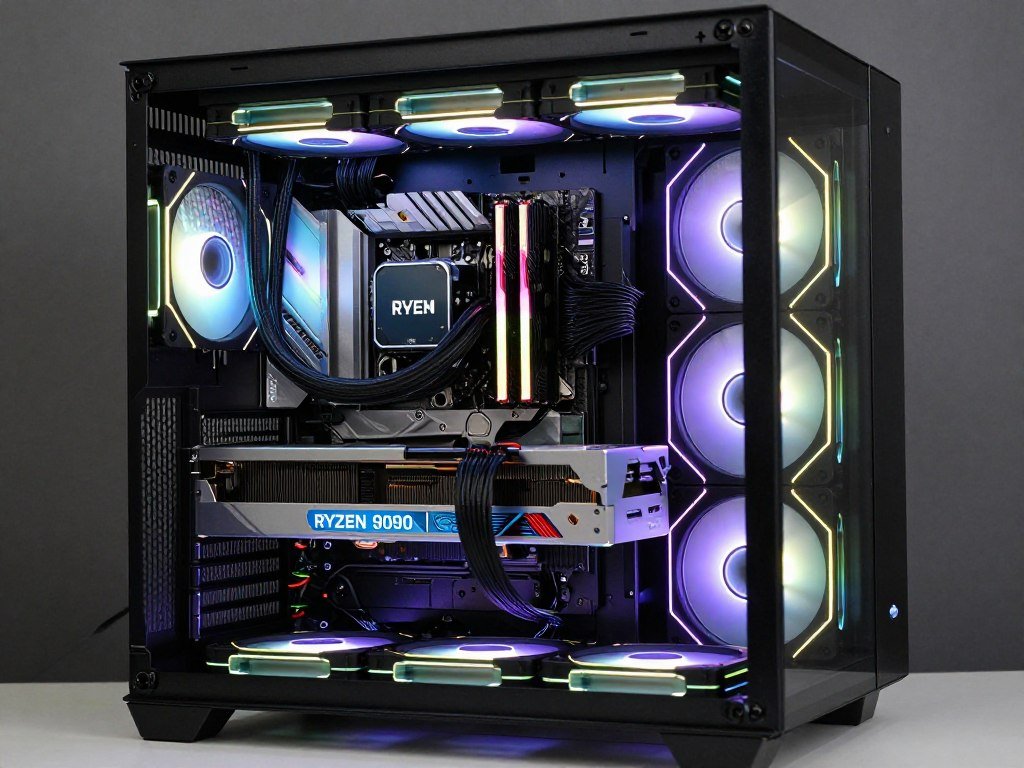
Don’t wait for quantum gaming. Don’t budget for future quantum upgrades. Don’t buy components marketed as “quantum ready.” Build for the games available right now using the hardware available right now.
That means focusing on proven components. An RTX 5090 will serve you better than any theoretical quantum processor. A Ryzen 9000-series CPU handles modern games effectively. Fast NVMe storage cuts load times today, not in some theoretical quantum future.
Future-Proofing Is About Balance, Not Technology Bets
The best way to future-proof your build isn’t predicting which new technology will matter. It’s building a balanced system that can adapt to changes.
A well-balanced build with a strong CPU and GPU can handle new game engines, new rendering techniques, and new optimization approaches. Whether those new techniques involve quantum computers or not becomes irrelevant if your foundation is solid.
Check your current components for CPU bottlenecks or GPU limitations instead of worrying about quantum processors that don’t exist yet.
Monitor Resolution Matters More Than Quantum Computers
Want to know what actually affects your gaming experience? Your monitor choice. The resolution bottleneck you get from a 4K display matters right now. Quantum gaming is theoretical.
A 1440p 240Hz monitor gives you better gaming today than any quantum computer will give you for years. Invest in real improvements, not future possibilities.
Build Smart for Today’s Gaming
Stop worrying about theoretical quantum processors. Find out if your current components are actually balanced and where real bottlenecks are hurting your gaming performance right now.
Upgrade Paths That Make Sense
When planning upgrades, think about generational improvements in classical hardware. The jump from RTX 40-series to 50-series brings real performance gains. Upgrading from DDR4 to DDR5 provides measurable benefits.
Quantum computing offers zero upgrade path for consumers right now. Focus on the Intel vs AMD decisions that actually matter for your budget and use case.
The Gaming Industry’s Actual Quantum Plans
What are game companies actually doing with quantum computing? Less than you’d think.
Research Partnerships, Not Product Plans
A few gaming companies have research partnerships with quantum computing firms. These are exploratory programs. Scientists investigate whether quantum algorithms could help with specific problems in game development.
These partnerships produce research papers, not products. The gaming industry is exploring possibilities, not building quantum gaming platforms.
The Investment Reality
Gaming companies invest millions in graphics technology, physics engines, and AI systems that work on classical hardware. They invest thousands in quantum computing research.
That investment ratio tells you everything. Quantum computing is a curiosity for the gaming industry, not a priority.
Why Game Developers Are Skeptical
Talk to actual game developers about quantum computing. Most are skeptical. They’re dealing with real problems: optimization, debugging, cross-platform compatibility, performance on a range of hardware from low-end to high-end.
Quantum computers don’t solve those problems. They add complexity. Game developers need reliable tools that work everywhere. Quantum processors that need cryogenic cooling don’t fit that profile.
“We can barely get games to run consistently on the hardware that exists today. Adding quantum computers to the mix would make testing and optimization exponentially harder, not easier.”
Mobile Gaming Matters More
Here’s what the gaming industry actually cares about: mobile gaming, cloud gaming, cross-platform play, live service models, and monetization strategies. Quantum computing doesn’t appear on that list.
The number of gamers playing on phones exceeds PC and console combined. The industry follows the money. Quantum gaming has no clear revenue path, so it gets minimal attention.
The Numbers: Quantum vs. Classical Gaming Performance
Let’s compare actual performance numbers where they exist.
Task-Specific Benchmarks
Quantum computers can factor large numbers exponentially faster than classical computers. They can optimize certain problems more efficiently. But these benchmarks are for specific algorithms, not gaming workloads.
For tasks games actually require – rendering triangles, running physics simulations, handling input latency – classical computers are thousands of times faster. Not a little faster. Thousands of times.
| Computing Task | Classical Computer Performance | Quantum Computer Performance | Winner for Gaming |
| Graphics Rendering | Billions of triangles per second | Not applicable | Classical (by infinite margin) |
| Physics Simulation | Real-time at 60+ FPS | Too slow for real-time | Classical |
| Random Number Generation | Pseudo-random, fast | True random, slow | Depends on use case |
| Pathfinding Optimization | Good enough for games | Theoretically better | Classical (practical) |
| Machine Learning Inference | Fast with dedicated hardware | Potentially faster for specific models | Unclear |
Latency Is Everything in Gaming
Games need low latency. Input lag over 50ms feels bad. Frame times need consistency. You need reliable performance every frame.
Quantum computers introduce massive latency. You send a problem to the quantum processor, wait for decoherence to settle, run the calculation, correct errors, and receive results. That process takes milliseconds to seconds.
A 60fps game has 16.67ms per frame to do everything. Quantum computers can’t operate within that time budget for the tasks games need.
Error Correction Overhead
Quantum computers make errors. Lots of errors. Current quantum computers need dozens of physical qubits to create one logical qubit that can reliably perform calculations.
Error correction consumes computational resources. It adds latency. It makes quantum computers slower in practice than raw specifications suggest.
Games can’t tolerate the error rates quantum computers produce. You can’t have enemy AI that glitches out because a cosmic ray hit your quantum processor.
What We’ve Learned from Actual Quantum Gaming Experiments
Several researchers have created games that run on quantum computers. Here’s what those experiments taught us.
Games Quantum Computers Can Actually Run
James Wootton created several games quantum computers for quantum computers. These include puzzle games based on quantum mechanics principles, simple strategy games using quantum algorithms, and educational games teaching quantum concepts.
These quantum games share common traits. They’re turn-based, not real-time. They have simple graphics generated by classical computers. The quantum computer handles game logic, not rendering. And they’re designed specifically around what quantum computers can do.
The Fun Factor Problem
Here’s the harsh truth: quantum games aren’t particularly fun. They’re interesting as educational tools. They demonstrate quantum concepts effectively. But they don’t compete with traditional games for entertainment value.
Part of this is hardware limitations. But part is fundamental. Game design principles developed over decades assume classical computing. Quantum games need new design languages we haven’t invented yet.
Hybrid Approaches Show Promise
The most interesting quantum gaming experiments use hybrid approaches. The quantum computer handles one specific task – generating random events, optimizing puzzle solutions, or calculating probabilities. Classical hardware handles everything else.
This model might be the future of quantum gaming. Not quantum computers replacing your gaming PC, but quantum processors as specialized co-processors for narrow tasks.
Example: A roguelike game might use a quantum computer to generate truly random dungeon layouts. The quantum processor creates the blueprint. Your GPU renders it. Your CPU runs game logic. The player never knows quantum computing was involved, they just notice dungeons feel more varied.
This approach works around quantum computers’ limitations while leveraging their strengths. It’s realistic and potentially valuable, unlike fantasies about quantum gaming PCs.
Should Gamers Learn Quantum Computing?
If you’re interested in how computers work, quantum computing is fascinating. But is it relevant to gaming?
For Most Gamers: No
Learning about CPU architectures, GPU rendering pipelines, and memory management is more valuable for understanding gaming performance than learning quantum mechanics. The CPU core scaling issues in modern games matter more than quantum algorithms.
Focus on practical knowledge first. Understand what causes VRAM bottlenecks. Learn how game engines work. Study optimization techniques developers use.
For Aspiring Developers: Maybe
If you want to develop games professionally, basic quantum computing literacy might be valuable in 10-15 years. Emphasis on “might” and “basic.”
You’re better off mastering current game engines, learning modern rendering techniques, and understanding classical optimization first. Add quantum computing as supplementary knowledge if you have time and interest.
For Hardware Enthusiasts: It’s Interesting Context
If you enjoy understanding how hardware works at a deep level, quantum computing provides interesting context. It shows you the limits of classical computing and why certain problems are hard.
But don’t let quantum computing distract from practical hardware knowledge. Understanding how your RTX 5090 actually renders frames helps you more than understanding Shor’s algorithm.
More Useful Knowledge for Gamers
- How GPUs render graphics
- CPU architecture and core utilization
- Memory bandwidth and latency
- Storage speed impact on load times
- Network latency and packet loss
- Game engine optimization techniques
- Driver and software configuration
Quantum Knowledge
- Interesting but not immediately practical
- Might be relevant in 10+ years
- Good for general tech literacy
Why Optimizing Your Current PC Beats Waiting for Quantum
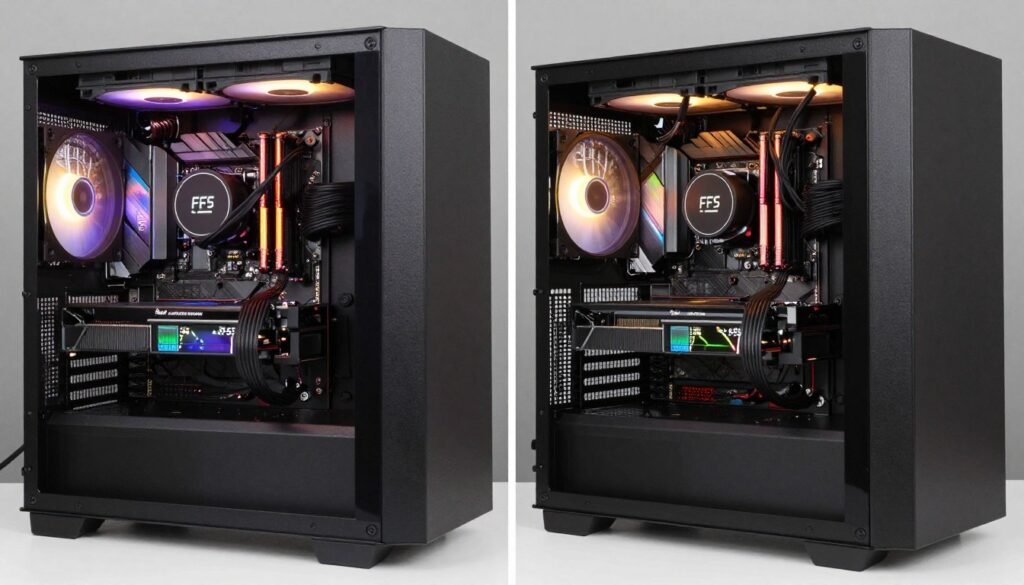
You know what makes a bigger difference to your gaming experience than quantum computers will in the next decade? Proper optimization of your current hardware.
Most PCs Underperform Their Specs
I’ve tested hundreds of gaming PCs. Most perform 20-30% below their potential. Thermal throttling, driver issues, background processes, incorrect settings – these problems are everywhere.
Fixing those issues costs nothing and improves performance immediately. Compare that to waiting years for quantum gaming that might never come.
The Optimization Checklist That Actually Matters
Start with thermal management. Clean dust from your PC. Reapply thermal paste if it’s been 2+ years. Ensure case fans are configured correctly for airflow.
Next, update drivers. Not just GPU drivers – chipset drivers, network drivers, storage drivers. Outdated drivers cause stuttering, crashes, and performance loss.
Check your PC optimization settings. Disable unnecessary startup programs. Configure Windows power settings for performance. Ensure XMP/DOCP is enabled for RAM.
These fixes give you real FPS gains right now. Quantum computers give you nothing.
Component Balance Trumps Raw Power
A balanced mid-range system outperforms an unbalanced high-end system. Pairing an RTX 5090 with a 5-year-old CPU creates bottlenecks that waste GPU potential.
Check your system balance before upgrading anything. Tools exist to identify where your bottlenecks are. Use them. Make informed upgrade decisions based on your actual limitations, not theoretical future technology.
Find Your Real Performance Bottlenecks
Quantum gaming is years away. Your PC has performance issues right now. Find out exactly where your system is bottlenecked and get specific recommendations for fixes that work today.
Real Upgrades vs. Waiting for Miracles
Every year you wait for quantum gaming is a year you could be gaming better on optimized classical hardware. Upgrade your GPU now if it’s holding you back. Don’t wait for quantum processors.
Upgrade your CPU if you’re hitting core bottlenecks. Add more RAM if you’re swapping to disk. Get faster storage if load times frustrate you. These upgrades improve your gaming today.
The best time to upgrade was when you needed it. The second best time is now. Waiting for quantum gaming is never the right answer.
The Bottom Line on Quantum Gaming
Let’s wrap this up with straight talk about what quantum gaming actually means for you.
What’s Real
Quantum computers exist. They’re getting more powerful. They solve specific problems faster than classical computers. Some game developers are experimenting with quantum algorithms for procedural generation and AI.
In 10-20 years, quantum computers might enhance certain aspects of game development. Cloud gaming services might use quantum processors on the backend for optimization tasks.
What’s Hype
Consumer quantum gaming PCs are not happening. Quantum computers will not replace your GPU. Game performance will not magically improve because of quantum computing. Any product marketed as “quantum ready” is lying to you.
The fundamental architecture of quantum computers makes them unsuitable for real-time gaming applications. They’re specialized tools for specific problems, not general-purpose gaming hardware.
What You Should Do
Build your gaming PC with current technology. Choose components based on actual gaming benchmarks, not theoretical quantum futures. Optimize your existing hardware. Fix bottlenecks. Balance your system.
When quantum gaming becomes relevant – if it becomes relevant – you’ll know. It won’t be subtle. It won’t require speculation. There will be actual products you can buy and test.
Until then, focus on the games you can play today with the hardware you can buy today. That’s the only approach that makes sense.
Final Verdict: Quantum gaming is interesting science and speculative technology. It’s not a practical consideration for PC builders or gamers in 2026. Don’t let quantum hype distract you from making smart hardware decisions based on real performance data and actual gaming needs.
Wrapping Up the Quantum Gaming Reality Check
We covered a lot of ground here. Quantum computing is real technology with real potential. But its impact on gaming is massively overhyped by people who don’t understand either quantum computers or games.
The truth is boring: quantum computers are specialized research tools that might, eventually, enhance specific backend processes in game development. They won’t replace your gaming PC. They won’t change how you play games. They won’t solve the performance issues you face today.
What solves those issues? Proper hardware selection. Balanced components. Good optimization. Understanding where your system bottlenecks and fixing those specific problems.
I’ve been building gaming PCs since quantum computing was pure theory. The fundamentals haven’t changed. Match your CPU to your GPU. Ensure adequate cooling. Choose the right resolution for your hardware. Make informed build decisions based on data, not hype.
Quantum gaming will arrive when it arrives – if it arrives. Until then, you’ve got real gaming to do on real hardware. Make that hardware work as well as it possibly can instead of waiting for miracles that might never come.
Now stop reading about quantum computers and go check if your GPU drivers need updating. That’ll actually improve your frame rates.