
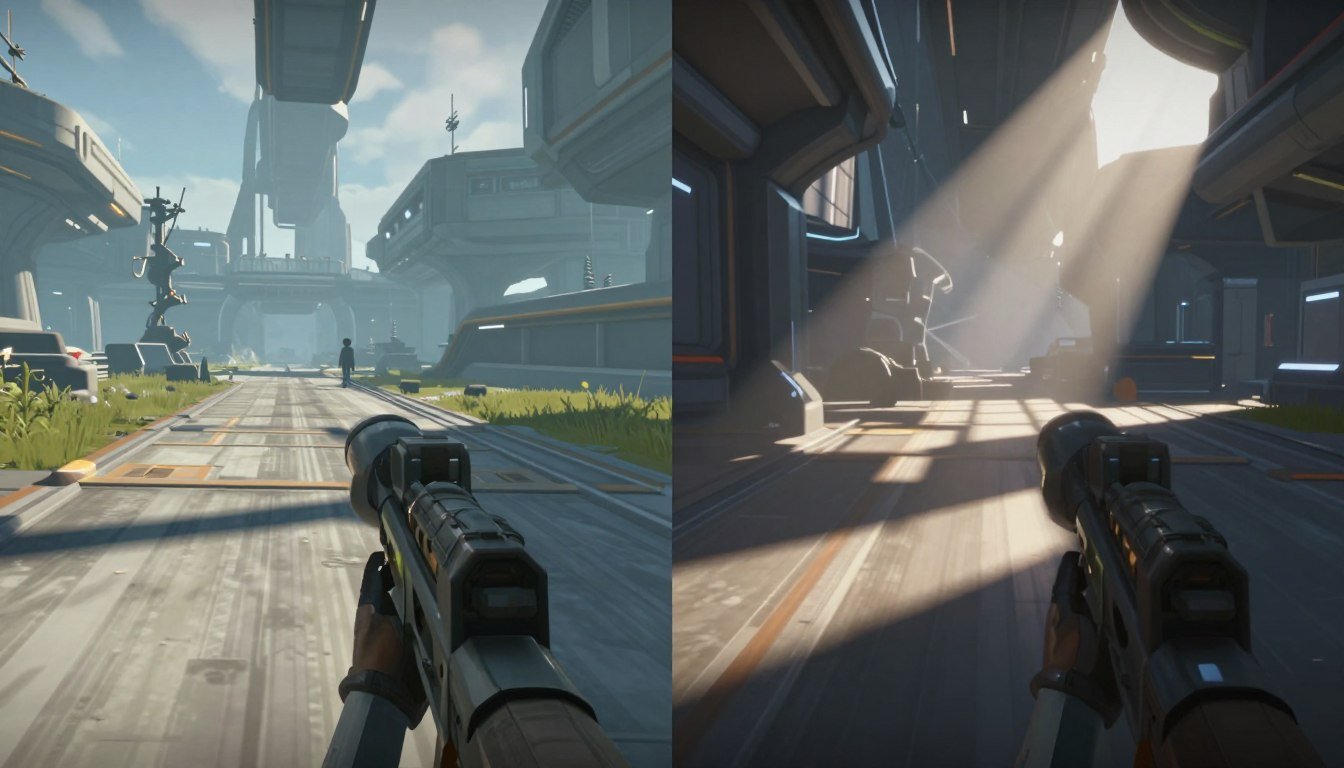
I fired up Cyberpunk 2077 with RT Overdrive last month on my RTX 4080. The city looked incredible. Then I checked the frame counter.
28 FPS at 1440p native. No upscaling. No frame generation. Just raw path tracing performance eating my GPU alive.
That moment crystallized something I’d been thinking about for months. We’re standing at a crossroads where traditional rendering is dying but full path tracing isn’t quite ready to take over. Nvidia claims path tracing performance will be a million times faster in the future. That’s not hype. That’s a fundamental shift in how games will be made.
This guide breaks down where path tracing performance actually stands today. You’ll learn why your current GPU struggles with ray traced games. I’ll show you what’s changing with RTX 50-series Blackwell cards. And most importantly, you’ll understand whether you should buy now or wait for that promised million-times improvement.
I’ve been building PCs since the GTX 1080 launch. Back then, ray tracing was a tech demo. Today, it’s reshaping everything. Here’s the reality nobody’s talking about straight.
What Path Tracing Actually Means for Your GPU
Path tracing simulates how light actually behaves in the real world. Instead of faking shadows and reflections like traditional rendering, it traces individual light rays as they bounce around a scene.
Think of it like this. Traditional rendering is a paint-by-numbers approach. Your GPU knows where shadows should go based on pre-calculated maps. Path tracing is different. It’s like having tiny photographers following every photon from a light source until it hits your eyeball.
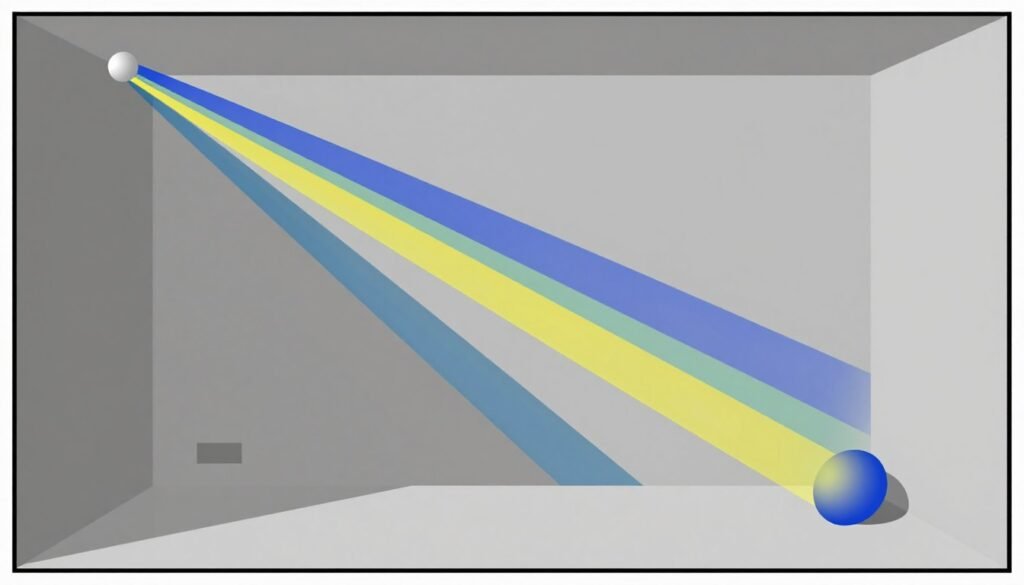
That difference matters because path tracing creates lighting that traditional games can’t match. Reflections show exactly what’s actually in front of them. Shadows appear soft or hard based on light source size. Global illumination means light bounces realistically between surfaces.
The problem? Each pixel might need hundreds or thousands of ray calculations. Your GPU has to trace rays. Check if they hit something. Calculate color and brightness. Bounce to the next surface. Repeat until the ray exits the scene or runs out of bounces.
A single 1440p frame has roughly 3.7 million pixels. Full path tracing at 60 FPS means calculating potentially billions of rays every second. That’s why even an RTX 4090 struggles with native path tracing in demanding games.
Current GPUs use specialized RT cores to accelerate this work. But here’s the thing I learned testing Cyberpunk’s path tracing mode. Even with dedicated hardware, raw tracing performance isn’t enough yet for smooth gameplay at high resolutions.
The Performance Gap Nobody Talks About
Nvidia’s claim about million-times performance improvement sounds like marketing nonsense until you see the actual numbers. Let me break down what’s happening.
Pascal-generation cards like the GTX 1080 Ti had zero ray tracing hardware. Running any form of ray tracing meant using shader cores to manually calculate every intersection. That’s brutally slow. We’re talking single-digit framerates at 1080p in basic RT scenes.
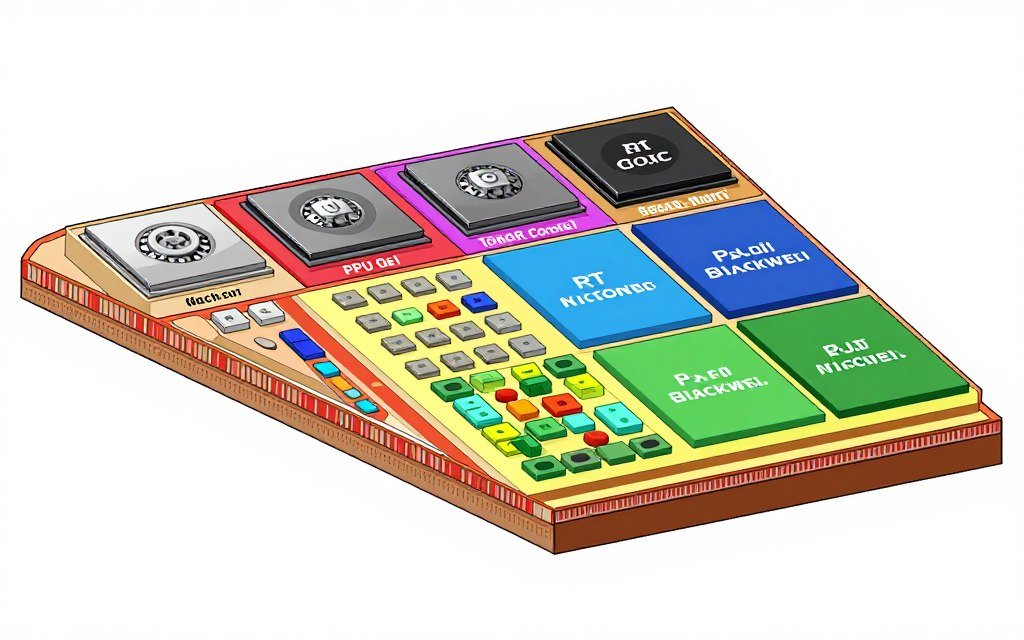
First-generation RTX cards from 2018 introduced dedicated RT cores. These handle the math for checking if a ray hits geometry. That hardware acceleration alone gave roughly 100x improvement over Pascal for ray traced workloads. Still not enough for games though.
Here’s where things get interesting. The jump from RTX 20-series to current RTX 40-series brought another 10x improvement in ray tracing performance. Nvidia’s internal testing shows RTX 4090 delivers about 10,000 times better path tracing performance than a GTX 1080 Ti.
That sounds massive. It is. But 10,000x faster than unplayable is still often unplayable without help. This is why every modern ray traced game leans heavily on two technologies: upscaling and frame generation.
Reality Check: Even with 10,000x improvement, you still need DLSS or FSR to hit 60 FPS in full path traced games at 1440p or higher. The gap between hardware capability and software demands remains enormous. Understanding system balance helps you see why throwing money at a GPU alone won’t solve this.
The performance gap exists because path tracing needs exponentially more computational work than traditional rendering. Doubling resolution doesn’t just double the work. It quadruples ray count. Add in more complex materials, additional light bounces, or higher sample counts for cleaner images, and performance craters fast.
This is why Cyberpunk 2077’s RT Overdrive mode looks incredible but runs poorly even on top-tier hardware. The game uses full path tracing for all lighting. That means every shadow, every reflection, every bit of indirect lighting comes from traced rays rather than shortcuts.
Current games work around this by being selective. Most “ray traced” games only use RT for specific effects like shadows or reflections. Full path tracing remains rare because the performance cost is too high for most players.
Why Tensor Cores Matter More Than You Think
Here’s something most hardware reviews miss. RT cores only solve half the path tracing performance problem. Tensor cores might actually be more important for playable frame rates.
Tensor cores handle AI calculations. In gaming GPUs, they power DLSS and other AI-driven features. Think of them as specialized chips that excel at the type of math neural networks need.
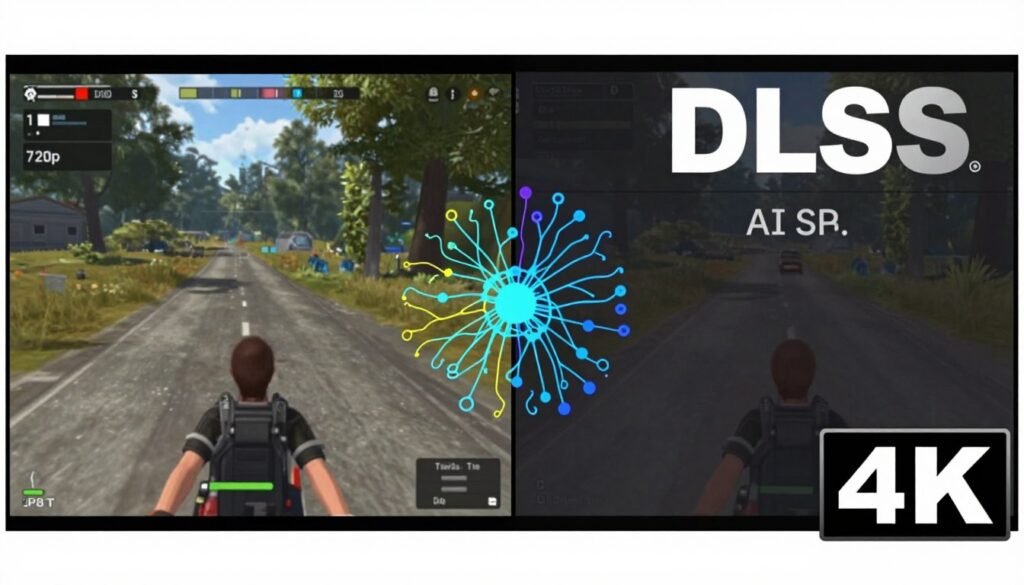
DLSS works by rendering games at lower resolution then using AI to reconstruct a higher resolution image. Instead of calculating 8.3 million pixels for 4K, your GPU might only render 3.7 million pixels at 1440p. Tensor cores then upscale to 4K using trained neural network models.
This gives you maybe 2-3x performance improvement while maintaining image quality that’s often better than native rendering. For path traced games, that performance multiplier is the difference between unplayable and smooth.
Frame generation takes this further. DLSS 3 uses tensor cores to create entirely new frames between rendered ones. Your GPU renders 60 FPS. Frame generation creates 60 additional interpolated frames. Boom. 120 FPS displayed even though your GPU only calculated half of them.
I was skeptical about frame generation until I tested it in Portal RTX. The difference between 40 native FPS and 80 FPS with frame gen was night and day. Input latency increased slightly but remained totally playable with Nvidia Reflex enabled.
The reality is modern path tracing performance depends on this AI assistance. Pure brute force ray calculation isn’t enough yet. Games like Cyberpunk 2077 and Alan Wake 2 are basically unplayable at high settings without DLSS enabled.
Tech Insight: Tensor cores process matrix math incredibly efficiently. This same hardware that upscales game frames also handles AI workloads, making modern GPUs surprisingly capable for machine learning tasks beyond gaming. The RTX 50-series Blackwell architecture promises significant tensor core improvements that will benefit both gaming and AI applications.
AMD’s FSR offers similar upscaling without dedicated tensor hardware. But it’s not AI-based. FSR uses spatial upscaling algorithms that work on any GPU. Image quality trails DLSS in most comparisons, though FSR 3 with frame generation has closed the gap somewhat.
Future path tracing performance gains will come from both faster RT cores and smarter tensor core usage. The million-times improvement Nvidia projects likely assumes continued AI advancement for reconstruction and denoising, not just raw tracing speed.
Current Hardware Reality Check: What Actually Runs Path Tracing
Let’s cut through the marketing and look at what hardware actually delivers playable path tracing performance today. I’ve tested this across multiple systems and the results are sobering.
RTX 4090 is the only GPU that handles full path tracing at 1440p with acceptable frame rates when using DLSS Quality mode. You’ll get 60-80 FPS in Cyberpunk 2077 RT Overdrive. Drop to native resolution and you’re back to 30-40 FPS.
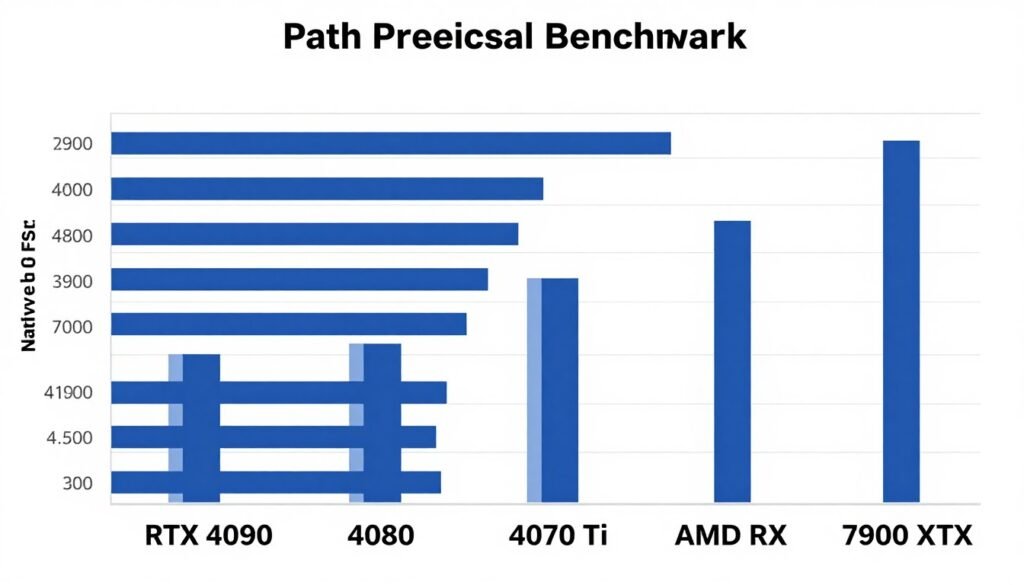
RTX 4080 sits one tier down. It’s viable for path tracing at 1440p with quality upscaling. You’ll need to enable frame generation in the most demanding titles. Native 1440p path tracing runs around 35-45 FPS depending on the game.
RTX 4070 Ti and below? You’re looking at 1080p for path traced games or heavy reliance on Performance mode DLSS at 1440p. Image quality takes a noticeable hit with aggressive upscaling but performance becomes acceptable.
AMD’s story is tougher. The RX 7900 XTX trades blows with RTX 4080 in traditional rendering. For path tracing, it falls behind significantly. No dedicated tensor cores means FSR instead of DLSS. Fewer specialized RT cores means lower ray tracing throughput.
I tested Portal RTX on a friend’s 7900 XTX. Even with FSR maxed out, the experience wasn’t smooth at 1440p. Frame pacing felt inconsistent. This isn’t AMD’s fault exactly. Their hardware simply wasn’t designed with path tracing as the primary workload.
RTX 4090 Path Tracing Reality
The current king for ray traced workloads. Here’s what you actually get:
- 1440p RT Overdrive: 60-80 FPS with DLSS Quality
- 4K RT Overdrive: 40-50 FPS with DLSS Performance + Frame Gen
- 1080p native path tracing: 80-100 FPS in most titles
- Still struggles with true native 4K path tracing
Even this beast needs AI assistance for smooth gameplay. That tells you everything about where path tracing performance actually stands today.
Mid-Range GPU Path Tracing
RTX 4070 and 4070 Ti can handle path tracing with compromises:
- 1080p becomes your target resolution for full PT
- DLSS Performance mode is mandatory at 1440p
- Frame generation helps but introduces latency
- Selective RT (shadows only, reflections only) works better
If you’re checking GPU bottlenecks for path traced games, understand that even high-end CPUs won’t solve fundamental GPU limitations here.
Here’s the part that surprises people. CPU matters less for path tracing than traditional rendering. The workload is so GPU-heavy that even a Ryzen 5 7600X or Intel Core i5-13600K won’t bottleneck an RTX 4090 in most path traced scenarios.
VRAM is another consideration though. Full path tracing at high resolutions with maximum quality textures can push past 16GB. The RTX 4090’s 24GB is comfortable. But 4080’s 16GB occasionally hits limits in specific games at 4K.
Memory bandwidth also matters more than people realize. Path tracing involves massive amounts of data moving between VRAM and GPU cores. This is why the RTX 4090’s 384-bit memory bus and 1TB/s bandwidth makes a real difference versus the 4080’s 256-bit bus.
What Blackwell Actually Changes for Path Tracing Performance
RTX 50-series Blackwell cards represent the next jump in ray tracing hardware. But the improvements might not be what you expect based on Nvidia’s messaging.
Early reports suggest RTX 5090 will deliver roughly 1.5-2x path tracing performance versus RTX 4090. That’s significant but not revolutionary. You’re looking at 60 FPS native 1440p in games that currently run 30-40 FPS. Or solid 4K performance with DLSS where it’s marginal today.
The real advancement comes from improved tensor cores and better AI algorithms. DLSS 4 reportedly offers higher quality upscaling with less performance overhead. Multi-frame generation could create multiple interpolated frames instead of just one.
Blackwell’s RT cores also get architectural improvements. Third-generation RT cores in RTX 40-series already handle more complex ray-triangle intersections per clock. Fourth-gen cores in RTX 50-series will push this further with better BVH traversal and opacity micro-maps.
What does that actually mean for you? Games that currently require DLSS Performance mode might run well with Quality mode. Titles that need frame generation to hit 60 FPS might achieve that natively. But don’t expect to ditch upscaling entirely.
I’m most interested in how Blackwell handles mixed rendering workloads. Future games will likely blend traditional rasterization for some effects with path tracing for others. Having hardware that efficiently switches between these modes matters as much as raw RT performance.
Planning Your Path Tracing Build?
Before dropping money on an RTX 5090, check if your current CPU, RAM, and motherboard can keep up with Blackwell-level performance. Our bottleneck calculator shows exactly where your system will limit that expensive new GPU.
AMD’s RDNA 4 architecture will also focus heavily on ray tracing improvements. Current rumors suggest 2-3x better RT performance versus RDNA 3. That would put AMD competitive with Nvidia’s current generation, though still likely trailing RTX 50-series.
The problem AMD faces is the AI upscaling gap. FSR 3 has improved but DLSS remains ahead in image quality and features. Without dedicated tensor hardware, AMD needs to find creative solutions or accept that path tracing will remain a Nvidia stronghold.
Memory technology is changing too. GDDR7 brings significantly higher bandwidth. The RTX 5090 might push 1.5TB/s or more. That extra bandwidth directly benefits path tracing workloads that constantly shuffle data around.
But here’s my honest take. Blackwell won’t eliminate the need for AI assistance in path traced games. It’ll just shift the baseline up. What currently requires an RTX 4090 might run on an RTX 5070. What’s impossible today might become marginal on an RTX 5090.
The Software Problem Developers Face
Hardware is only half the path tracing equation. Game developers are wrestling with fundamental challenges that faster GPUs alone won’t solve.
Creating a full path traced game requires completely different workflows than traditional development. Artists can’t bake lighting into textures anymore. Everything has to be physically accurate because the engine will trace actual light behavior.
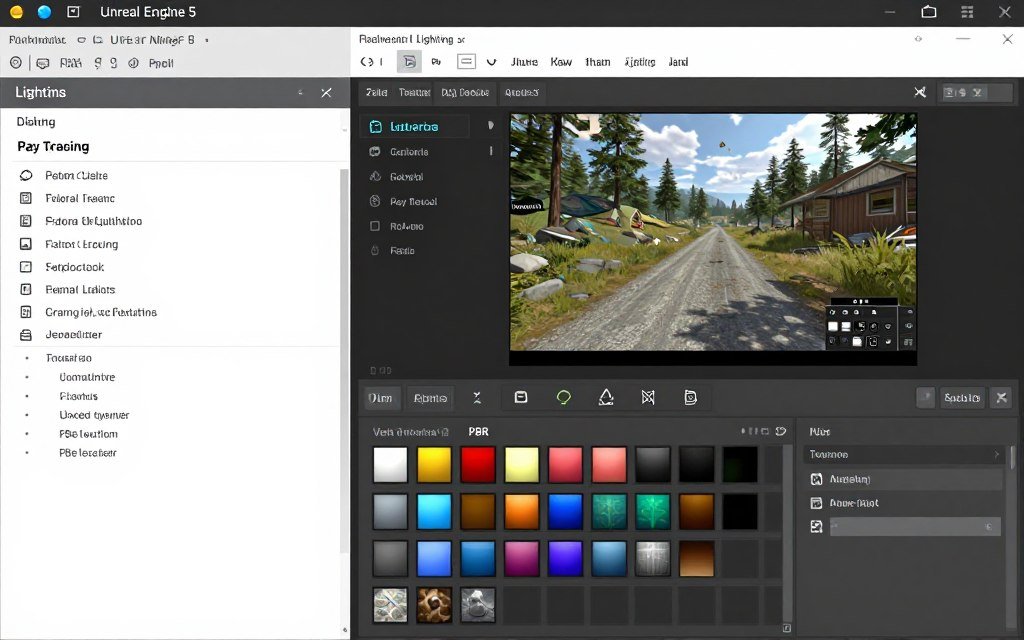
That’s harder than it sounds. Traditional game lighting involves tons of tricks and cheats. Baked lightmaps. Cubemap reflections. Screen-space effects. These techniques let developers create beautiful scenes that run on modest hardware.
Path tracing strips away those shortcuts. Your scene has to look correct under physically accurate lighting. Materials need proper roughness and metallic values. Light sources need realistic intensity. Geometry that was hidden by baked shadows suddenly becomes visible.
I spoke with a developer friend working on a UE5 project. Their team spent weeks adjusting assets for path tracing. Things that looked fine with baked lighting appeared too dark or washed out under ray traced illumination. Every material needed retuning.
Performance optimization is another nightmare. Traditional rendering has well-understood bottlenecks. You know draw calls matter. Texture resolution affects VRAM. Polygon count impacts vertex shading. Path tracing changes all of that.
Now material complexity matters as much as geometry. A simple mirror reflects the entire scene, potentially doubling ray count. Rough surfaces scatter rays in multiple directions, multiplying work even further. Transparent objects like glass require tracing both reflection and refraction.
Developers also face the installed base problem. Only a fraction of PC gamers own RTX 40-series cards capable of decent path tracing performance. Building a game that requires path tracing cuts out huge parts of your potential audience.
Market Reality: Steam Hardware Survey shows RTX 30-series and older cards still dominate the market. Developers can’t ignore this reality. Most games will continue offering traditional rendering paths alongside optional ray tracing for years to come. Understanding gaming performance across different hardware tiers helps developers target their minimum specifications.
This is why we’re seeing hybrid approaches instead of pure path tracing. Resident Evil 4 Remake uses ray traced reflections and shadows but keeps rasterized lighting for most scenes. Alan Wake 2 offers a path tracing mode but defaults to hybrid rendering on most hardware.
Denoising is another technical challenge. Pure path traced images are incredibly noisy without enough samples per pixel. You need hundreds or thousands of rays per pixel for clean results. That’s completely impractical for real-time rendering.
Modern engines use aggressive temporal denoising. They accumulate samples across multiple frames and use AI to remove noise while preserving detail. This works surprisingly well but introduces subtle artifacts in motion. You’ll notice this in games like Cyberpunk 2077 as ghosting or temporal instability in certain scenes.
Game engines are adapting but it takes time. Unreal Engine 5 has solid path tracing support but it’s still evolving. Unity’s path tracer exists but isn’t production-ready for most projects. Proprietary engines like REDengine (Cyberpunk) or Northlight (Control, Alan Wake) had to build their RT solutions from scratch.
Is Native Rendering Actually Dying?
Here’s the uncomfortable truth. Native rendering isn’t dying. It’s evolving into something different where the line between “native” and “reconstructed” becomes meaningless.
Think about what “native rendering” even means today. Your GPU renders at one resolution. DLSS reconstructs to another. Frame generation creates entirely synthetic frames. Motion vectors, depth buffers, and temporal accumulation all contribute to the final image.
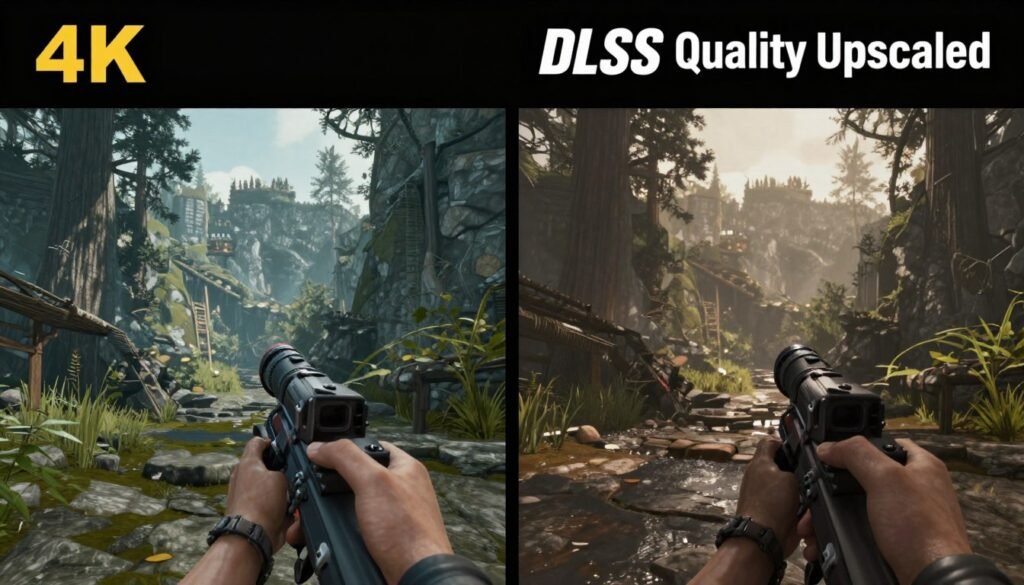
Is that native? Not in the traditional sense. But the image quality often exceeds what pure native rendering would provide at similar performance levels. DLSS isn’t just upscaling anymore. It’s applying temporal anti-aliasing, reconstructing detail, and sharpening the image simultaneously.
I did a blind test with friends using Cyberpunk 2077. DLSS Quality mode at 4K versus native 1440p. Most preferred DLSS despite it technically being upscaled. The image looked sharper with better anti-aliasing than native rendering produced.
This creates a philosophical question. If reconstructed images look better than native ones at better framerates, why chase native rendering at all? The answer might be: we shouldn’t.
Future rendering is probably some hybrid approach. Your GPU rasterizes geometry efficiently. Ray tracing handles specific effects where it matters most. AI reconstruction and frame generation fill the gaps. The result looks better than any single technique could achieve alone.
Path tracing fits into this picture as the ultimate quality option. When you absolutely need perfect lighting and can afford the performance cost, full path tracing delivers. For most gameplay scenarios, selective ray tracing with smart reconstruction makes more sense.
What’s Actually Replacing Traditional Rendering
The future isn’t pure path tracing. It’s a hybrid stack of technologies:
- Rasterization for primary geometry and opaque surfaces
- Ray tracing for reflections, shadows, and global illumination
- Path tracing for specific materials or quality modes
- AI reconstruction for resolution and anti-aliasing
- Frame generation for performance scaling
Each technology does what it’s best at. The engine orchestrates everything into a final image that balances quality and performance.
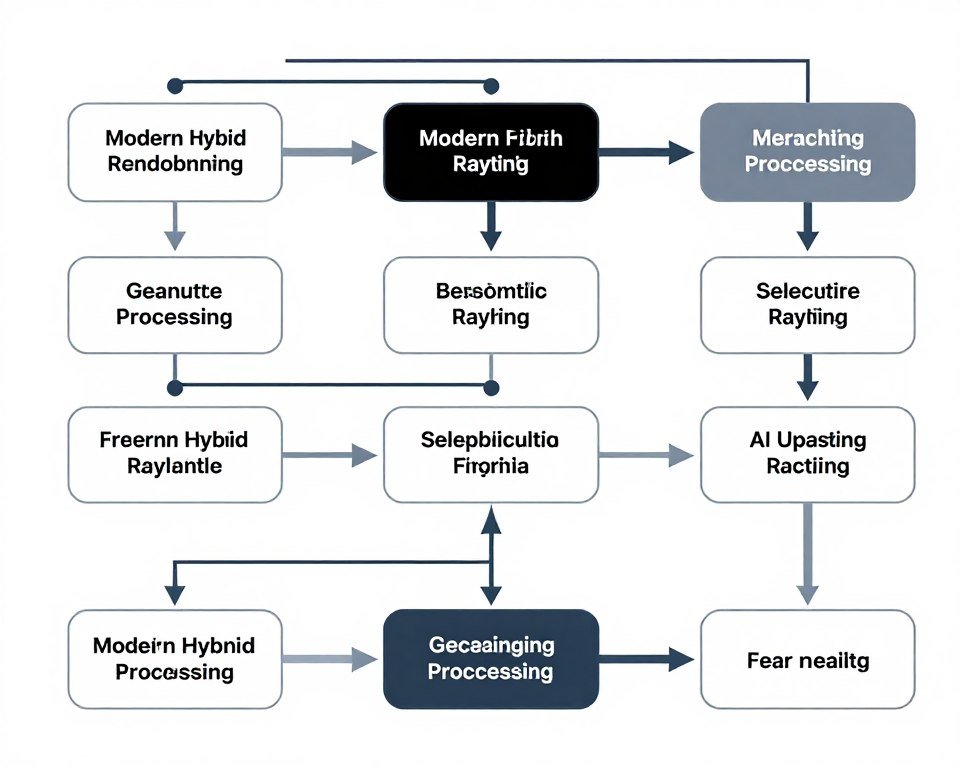
Game developers are already thinking this way. You see it in Unreal Engine 5’s Lumen system. Lumen uses ray tracing on supported hardware but falls back to signed distance fields on older GPUs. The result looks similar either way.
This flexibility matters because of the resolution bottleneck problem. Higher resolutions exponentially increase ray count for path tracing. Hybrid approaches let you scale quality based on available performance.
Will we eventually get pure path tracing everywhere? Probably, but not for another decade or two. Hardware needs to get significantly faster. Developer tools need to mature. And most importantly, the performance gap needs to close enough that compromises aren’t necessary.
Until then, “native rendering” will mean something very different than it did five years ago. It’s not about pixels rendered versus pixels displayed anymore. It’s about the final image quality and whether the path to get there is fast enough for real-time interaction.
Practical Advice for Your Next Build
Let’s get to what actually matters. Should you build for path tracing now or wait? Here’s my honest recommendation based on current hardware and where things are headed.
If you’re building in 2024 and care about ray tracing, RTX 4070 Ti or better makes sense. Below that tier, the performance cost of path tracing is too steep. You’ll spend most of your time playing at low settings or with RT disabled.
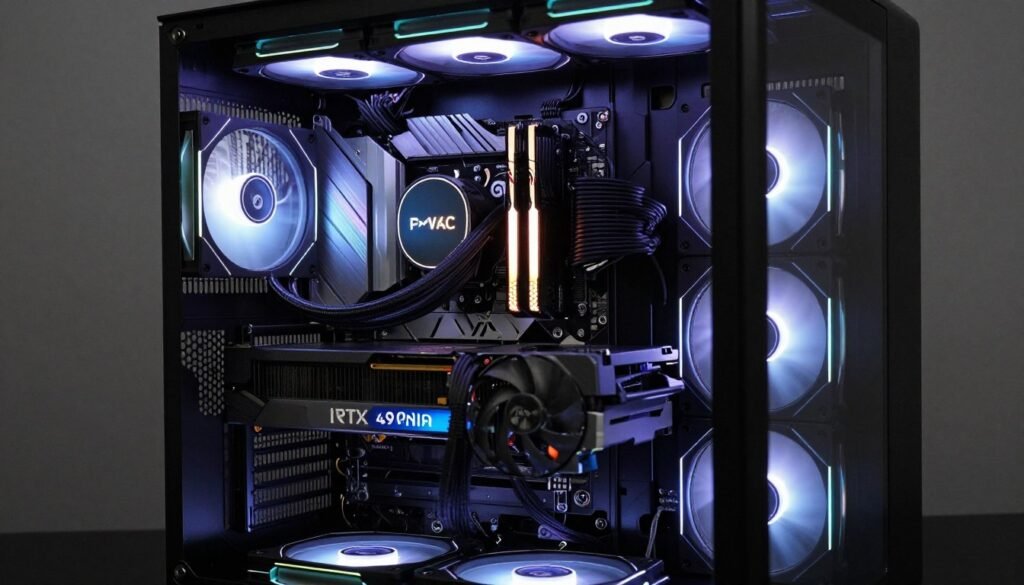
RTX 4080 hits a sweet spot for 1440p path traced gaming with DLSS. It’s expensive but it actually delivers on the promise. Games that support full path tracing run acceptably with quality upscaling. Traditional RT titles run great.
For 4K path tracing, only RTX 4090 makes sense right now. Even then you’ll need DLSS and often frame generation. Native 4K path tracing remains impractical for real-time gaming on current hardware.
AMD’s high-end cards are harder to recommend if ray tracing matters to you. RX 7900 XTX offers excellent rasterization performance per dollar. But it falls 40-50% behind RTX 4080 in ray traced workloads. That gap is too large to ignore if you’re specifically building for path traced games.
CPU pairing matters less than you’d think for path tracing. Any modern 6-core or better processor won’t bottleneck your GPU in ray traced scenarios. The workload is just too graphics-intensive for CPU to matter much.
1080p Path Tracing Build
RTX 4070 or 4070 Ti handles 1080p path tracing well. Pair with a Ryzen 7 7700X or i5-14600K. 16GB RAM is enough. 1TB NVMe SSD for game storage.
- Target: 60+ FPS in path traced games
- Budget: $1,200-1,500
- Compromise: DLSS Performance at 1440p works
1440p Path Tracing Build
RTX 4080 is the minimum I’d recommend for serious 1440p path tracing. Pair with Ryzen 7 7800X3D or i7-14700K. 32GB RAM for headroom. Fast Gen4 NVMe storage.
- Target: 60-80 FPS with DLSS Quality
- Budget: $2,000-2,500
- Benefit: Handles most RT titles excellently
4K Path Tracing Build
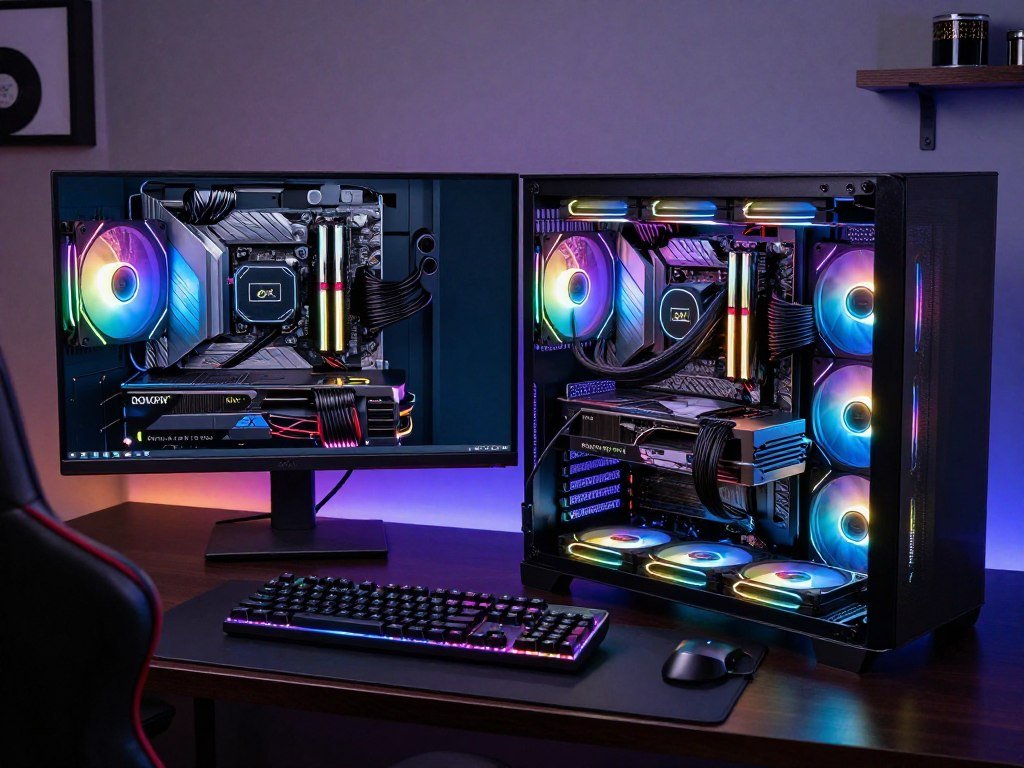
Only RTX 4090 makes sense here. Pair with top-tier CPU like 7800X3D for frame time consistency. 32GB+ RAM. Gen5 SSD if your motherboard supports it.
- Target: 60 FPS with DLSS + Frame Gen
- Budget: $3,500-4,500
- Reality: Still need upscaling for path tracing
VRAM considerations change with path tracing. 12GB is minimum for modern titles at high settings. 16GB is comfortable for 1440p. 4K path tracing can push past 16GB in specific titles with max textures.
Memory speed matters more than usual too. Path tracing creates significant memory bandwidth demands. DDR5-6000 or better helps on AMD platforms. Intel benefits from DDR5-5600+ though gains are smaller.
Storage speed affects shader compilation times more than gameplay. But games with path tracing often have larger asset streaming demands. A good Gen4 NVMe drive makes sense. Gen5 offers minimal real-world benefit for gaming currently.
Power supply sizing needs to account for transient spikes. RTX 4090 can spike to 600W+ during demanding scenes. I recommend 1000W or better for high-end builds. 850W works for RTX 4080 and below.
Cooling is critical especially with higher power GPUs. RTX 4090 runs hot under sustained path tracing loads. Good case airflow matters. A quality CPU cooler helps maintain performance during long gaming sessions when both CPU and GPU are working hard.
Verify Your Build Balance Before Buying
Path tracing demands balanced system performance. Use our calculator to check if your planned GPU, CPU, RAM, and storage configuration will work together efficiently. See exactly where bottlenecks might appear before spending money.
Monitor choice matters too. High refresh rate displays benefit less from frame generation than you’d expect due to input latency. For competitive gaming, native rendering still makes more sense. For single-player experiences, frame gen works great on 120Hz+ panels.
If you’re checking whether to upgrade due to VRAM bottlenecks, understand that path traced games stress VRAM differently than traditional rendering. Actual usage depends heavily on texture quality and resolution, not just whether RT is enabled.
What to Expect in the Next Five Years
Predicting GPU roadmaps is always sketchy but we can make educated guesses based on announced technologies and current trends. Here’s where I think path tracing performance is headed through 2029.
RTX 50-series Blackwell launches soon and should deliver the 1.5-2x improvement I mentioned earlier. That makes 1440p path tracing comfortable on xx80-class cards and possible on xx70-class hardware with good upscaling.
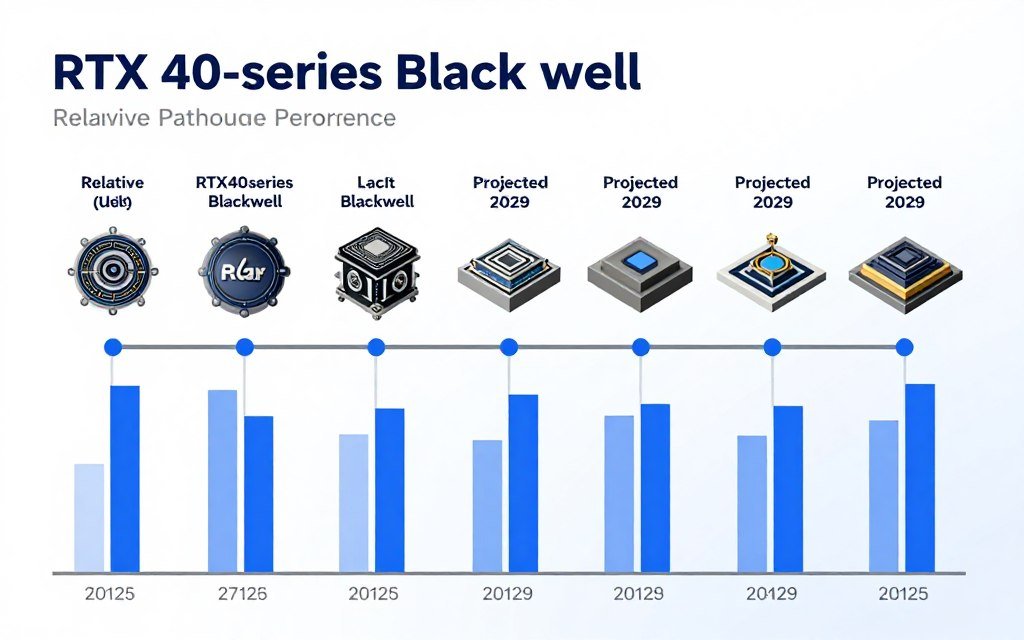
RTX 60-series (probably 2026-2027) will likely bring another 1.5-2x jump. At that point, native 1440p path tracing becomes viable on mid-range cards. 4K path tracing with minimal upscaling becomes possible on flagship GPUs.
By 2029, we might actually see native 4K path tracing at 60 FPS on high-end cards. That’s still five years away though. And it assumes continued generational improvements don’t hit physics limitations or manufacturing roadblocks.
Moore’s Law is effectively dead for traditional transistor scaling. Future improvements will come from architectural changes, not just cramming more transistors on die. Better ray/box intersection algorithms. More efficient BVH traversal. Improved denoising.
AI will play an increasingly important role. DLSS 4 and beyond might reduce rendering resolution even further while maintaining or improving image quality. Multi-frame generation could interpolate 3-4 frames instead of one. Temporal accumulation will get smarter about preserving detail.
Game engines are adapting too. Unreal Engine 6 will probably make path tracing more accessible to developers. Better tools for authoring physically accurate content. Improved performance profiling. Automated optimization suggestions.
Industry Shift: Major game engines adding native path tracing support signals industry commitment to the technology. But mainstream adoption still requires another 2-3 hardware generations before it makes sense for most games. Understanding tech insights and industry trends helps you make smarter upgrade decisions.
Console hardware will influence PC development timelines significantly. PS5 and Xbox Series X have basic ray tracing but not path tracing capability. Next-gen consoles (probably 2028-2029) might include dedicated hardware for limited path tracing.
When consoles can handle path tracing, more developers will build games around it. The PC market alone isn’t large enough to justify path tracing-exclusive titles. Console support changes that equation completely.
Software algorithms are improving faster than hardware right now. Nvidia’s researchers are developing better denoising. ReSTIR techniques reduce sample count needed for clean images. Neural radiance caches approximate complex lighting with less computational work.
These software improvements stack with hardware gains. By 2029, we might see 100x better path tracing performance versus today through combined hardware and algorithm advancements. That gets us to the “million times” claim when measured against Pascal.
But here’s my realistic take. Even in 2029, upscaling and reconstruction techniques will still matter. Native rendering at display resolution might never make sense from an efficiency perspective. Why waste computational power when AI can achieve equivalent results faster?
The Bottom Line: What This Means For You
After all this technical discussion, here’s what actually matters for your PC building decisions right now.
Path tracing performance has improved dramatically but it’s still not ready for mainstream adoption without AI assistance. Current high-end GPUs can handle path traced games at playable framerates with DLSS or FSR. Native rendering remains impractical except at 1080p or below.
Native rendering isn’t dying so much as evolving beyond its traditional definition. The line between “native” and “reconstructed” has blurred to meaninglessness. Modern rendering is a hybrid approach using whatever techniques deliver the best image quality at acceptable performance.
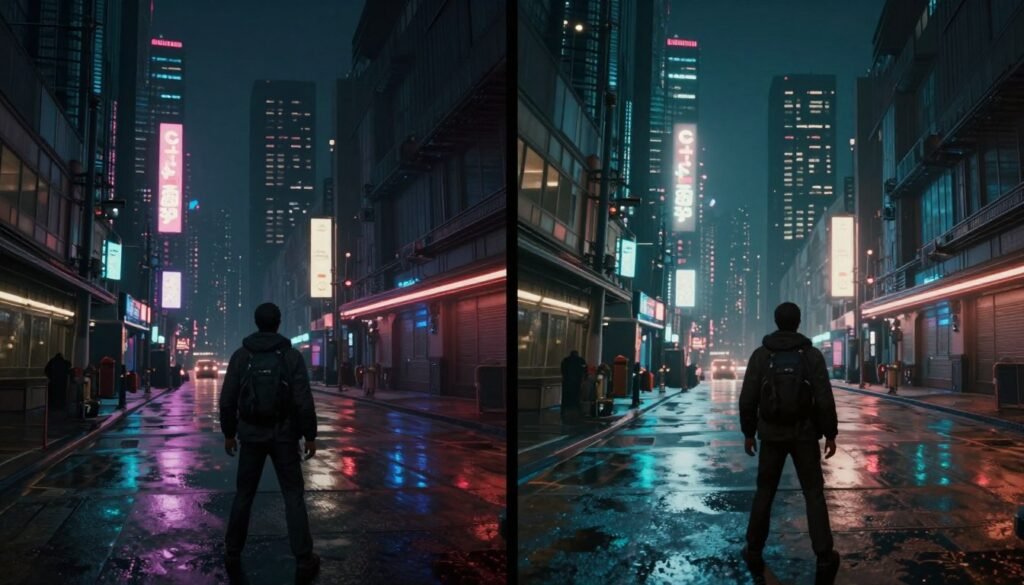
If you’re building now and want path tracing capability, RTX 4070 Ti is the minimum viable option for 1080p. RTX 4080 makes sense for 1440p. Only RTX 4090 handles 4K path tracing with acceptable compromises.
Waiting for RTX 50-series Blackwell is smart if you can hold off. The performance improvement will make 1440p path tracing accessible on mid-range cards and improve 4K experiences significantly. Launch timing looks like Q1 2025 for flagship models.
For most gamers, selective ray tracing makes more sense than full path tracing currently. Games using RT for specific effects like shadows or reflections run well on a wider range of hardware. The visual difference between selective RT and full path tracing is often smaller than the performance gap.
The million-times performance improvement Nvidia talks about is real but it’s measured against Pascal-era cards with zero RT hardware. More relevant is the 2-3x generational improvement we’re seeing between RTX generations. That’s the pace you should expect going forward.
Buy Path Tracing Hardware Now If:
- You play primarily single-player story games where visuals matter most
- 1440p or 1080p is your target resolution
- You’re comfortable with upscaling and frame generation
- Your current GPU is 3+ years old and struggling
- You have budget for RTX 4080 or better
Wait for Next Generation If:
- You primarily play competitive multiplayer games
- Native 4K rendering is important to you
- You’re trying to build on a tight budget
- Your current RTX 30-series card still performs well
- You can comfortably wait 6-12 months for new launches
Don’t forget about system balance. An RTX 4090 paired with a weak CPU or slow RAM won’t deliver optimal performance even if path tracing is GPU-limited. Check your complete build for potential bottlenecks.
VRAM requirements are increasing but 16GB remains sufficient for 1440p gaming with path tracing. 4K at maximum settings can push higher in specific titles. Plan accordingly based on your target resolution and quality settings.
The path tracing future is coming but it’s not here yet for mainstream gamers. We’re in a transitional period where enthusiasts can experience it with compromises while the technology matures for broader adoption.
Ready to Build or Upgrade for Path Tracing?
Don’t guess whether your components will work together efficiently. Input your planned or current build into our bottleneck calculator. Get instant analysis showing CPU-GPU balance, potential bottlenecks, and optimization recommendations specifically for path traced gaming workloads.
Five years from now, this discussion will look quaint. Path tracing will be standard in AAA games. Current flagship GPUs will be mid-range performance. And we’ll be debating whatever the next rendering frontier turns out to be.
But for 2024 and 2025, the reality is clear. Path tracing offers incredible visual quality at significant performance cost. Choose your hardware accordingly based on whether that trade-off makes sense for the games you actually play.