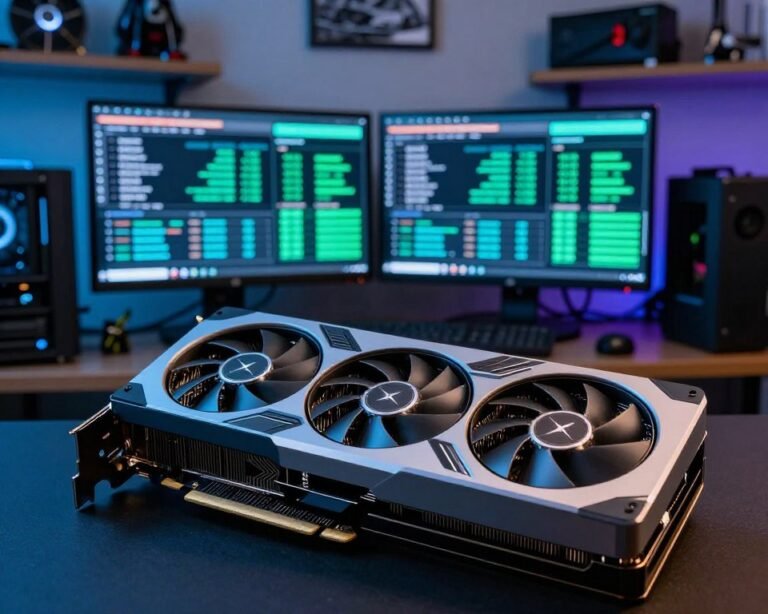
Fixing a GPU Bottleneck: A Real Reader’s Success Story
Ever felt like your fancy gaming setup isn’t living up to its promise? We’ve all been there, watching as our expensive gear can’t keep up. It’s a real bummer, and it usually means we’re facing a GPU Bottleneck.
Figuring out this problem was a big moment for us. We learned that just buying new stuff wasn’t the fix. What we really needed was a smart Performance Fix to get our system working right.
We’re sharing our story to help you find your own fix. Tackling a GPU Bottleneck can make a huge difference in your gaming. With the right steps, you can get your system running smoothly.
Key Takeaways
- Recognizing hardware limitations is the first step to better gaming.
- Upgrading parts is not always the best solution for low frame rates.
- System balance is more important than raw power alone.
- Small software adjustments can yield significant results.
- A structured approach helps you avoid unnecessary spending.
Understanding GPU Bottlenecks and Their Impact
Have you ever watched your frame rates drop during a game’s intense moments? It’s frustrating and makes you wonder why your expensive gear isn’t performing. Often, the problem is a GPU Bottleneck, which stops your system from reaching its top speed.
What is a GPU Bottleneck?
A GPU Bottleneck happens when one part of your computer is much slower than others. This slowdown makes your graphics card wait for data from slower parts. This waiting wastes your hardware’s power.
To avoid this, aim for a Balanced Build. Make sure your CPU and GPU match well. This balance lets your system work together smoothly, keeping performance high.
Common Signs of a GPU Bottleneck
Spotting these problems early can save you a lot of trouble. Look out for these signs if your system seems off:
- Low GPU usage percentages while gaming, often staying well below 90%.
- Sudden, noticeable stuttering during fast-paced action sequences.
- Inconsistent frame rates that fluctuate wildly even when settings remain the same.
- Delayed texture loading or objects popping into view unexpectedly.
How GPU Bottlenecks Affect Gaming Experience
These issues do more than just affect your numbers on screen. They ruin the immersion we all want. You might see visual problems or jarring drops in frame rates, making Smooth Gaming seem far away.
We think every gamer should have a smooth experience. Fixing these problems lets you enjoy a Balanced Build. It’s rewarding to see your games run perfectly, giving you the Smooth Gaming you deserve.
Identifying a GPU Bottleneck in Your System
Checking your hardware metrics is the best way to know if you have a GPU bottleneck. We get frustrated when games stutter. But, looking at the numbers helps us figure out if we need a Performance Fix or just adjust settings.
Tools We Use for Monitoring Performance
We use top software to track our hardware in real-time. MSI Afterburner is our favorite because it shows data right in the game. It lets us see our FPS and how hard our hardware is working without leaving the game.
HWInfo is another key tool. It gives us a detailed look at our motherboard and graphics card. We use it to make sure nothing is overheating or slowing down during long gaming sessions. These tools help us understand complex data easily.
“The goal of performance monitoring is not just to see the numbers, but to understand the story they tell about your system’s health.”
Key Metrics to Look For
When looking for a GPU bottleneck, watch the GPU usage percentage. If your graphics card is not fully used but your CPU is, you’ve found the problem. This imbalance often causes FPS issues in games.
We also check for frame time consistency. Big spikes in frame times mean your system is struggling. Spotting these spikes early is key to fixing performance issues.
Comparing CPU and GPU Performance
It’s important to understand how your processor and graphics card work together. The table below helps you understand the data you collect during tests.
| Scenario | GPU Usage | CPU Usage | Result |
|---|---|---|---|
| Balanced System | 95-99% | 50-70% | Optimal |
| CPU Bottleneck | 60-80% | 95-100% | Upgrade CPU |
| GPU Bottleneck | 99% | 40-60% | Upgrade GPU |
By comparing these values, you can quickly see where your system needs work. If your FPS is low and your GPU is fully used, your graphics card is maxed out. You might need to lower your graphics settings for a smoother game.
Our Journey to Fix the Bottleneck
We began our quest for better gaming by checking hardware compatibility. We realized that just buying the most expensive parts wouldn’t solve the problem. Instead, we aimed to find the perfect balance between our processor and graphics card.
Researching Possible Solutions
We spent hours reading forums and reviews to understand our setup’s limits. It was key to figure out if our frame rate drops were due to heat or a hardware mismatch. By comparing our specs to modern gaming needs, we found the best ways to improve.
We didn’t rush into buying new parts without a plan. Our research showed that a GPU Bottleneck often comes from mismatched generations, not just old parts. We sought a long-lasting solution, not a quick fix.
Upgrading Components: What We Chose
Choosing the right upgrade was a big decision. We focused on parts that would give us the biggest performance boost for our screen and refresh rate. Our goal was to make sure neither the CPU nor the GPU was waiting on the other.
We picked a new graphics card that matched our CPU’s power. This smart upgrade helped us keep a balanced build without replacing our whole system. Investing wisely let us enjoy top-notch gaming without spending too much.
The Role of Software Optimizations
Before making any hardware changes, we looked into software tweaks to fix the GPU Bottleneck. We found that adjusting game settings like texture quality and shadows could make a big difference. Sometimes, a simple driver update or power management tweak could improve performance.
Software optimizations are a powerful tool for gamers. By tweaking our operating system and background apps, we got more frames from our current hardware. This showed that you don’t always need an expensive upgrade to solve a GPU Bottleneck.
Testing and Measuring the Results
After making hardware changes, we started a series of tough performance tests. We aimed to make sure our Performance Fix really fixed the problems. The best way to prove this was with solid data.
Benchmarking Before and After
We used top software to get baseline metrics before the upgrades. By comparing these numbers to our post-upgrade data, we saw the GPU Bottleneck impact. The boost in processing power was clear and proved our point.
Our tests showed a steady increase in performance across all games. The system could handle demanding textures and complex scenes without trouble. This measurable growth showed our upgrade was worth it.
Analyzing Frame Rates and Load Times
Improving FPS was our main goal. We watched how the system handled busy scenes to keep the frame rate steady. A stable FPS is key to smooth gaming.
We also looked at load times in open-world games. Faster loading meant less waiting and more playing. These tweaks got rid of the lag that used to slow us down.
Real-World Gaming Experiences
Numbers don’t tell the whole story, so we played our favorite games for hours. The change was instant and incredibly satisfying. No more frustration from a GPU Bottleneck holding us back.
Everything felt smooth, and the Performance Fix let us crank up graphics settings. Smooth gaming is more than just high FPS. It’s about diving into a game fully. We’re really happy with how these changes improved our gaming time.
Tips for Preventing Future GPU Bottlenecks
To avoid a GPU Bottleneck, be proactive. Keeping your computer in top shape is key. Regular care ensures it stays a reliable powerhouse for years.
Regular Maintenance and Upgrades
Physical and digital care are vital for a healthy PC. Clean your fans every few months to avoid overheating. Also, update your drivers regularly to improve your hardware’s performance.
When upgrading, think about the whole system. Replacing parts without balance can cause issues. Always aim for a Balanced Build where everything works well together.
Understanding Game Settings and Requirements
Not all games need the highest settings. Adjust your graphics to match your monitor’s specs. This helps your hardware and prevents a GPU Bottleneck.
Check the system requirements before buying games. If your hardware is not up to par, adjust settings like shadows or anti-aliasing. This keeps your game smooth and enjoyable.
When to Consider a Complete Overhaul
At times, fixing an old system is more costly than starting anew. If you’re upgrading every few months, it’s time for a fresh start. A new, Balanced Build offers a better experience than trying to keep old parts running.
Consider the long-term cost when deciding to upgrade. If your motherboard, CPU, and RAM are outdated, a full replacement is wise. A modern setup helps you avoid future GPU Bottlenecks.
Can Reducing a GPU Bottleneck Help Improve Performance in GTA VI?
Reducing a GPU bottleneck can significantly enhance gameplay in GTA VI. Properly optimizing hardware ensures smoother frame rates and improved graphics quality. To achieve this, gamers should familiarize themselves with the gta vi system requirements for gamers, ensuring their setups meet or exceed the recommended specifications for a seamless experience.
Conclusion: Embracing the Journey Together
Mastering your hardware setup changes how you experience every digital world. We found that beating a GPU Bottleneck is doable for any serious gamer. All it takes is a willingness to learn.
Key Takeaways from Our Journey
You now know how to spot performance gaps in your own setup. By keeping FPS consistent, you make sure your system stays powerful for years. This keeps your hardware up to the task during long gaming sessions.
Building a Stronger Community
We encourage you to share your own hardware tuning stories. Your experiences help others get Smooth Gaming without stress. We’re excited to hear about the upgrades that changed your setup.
Final Thoughts on Performance
Working towards a balanced system is a journey of constant improvement. Every tweak brings you closer to the perfect gaming experience. Keep pushing your GPU Bottleneck limits for top FPS and visuals.
FAQ
What exactly is a GPU bottleneck and why should we care?
A GPU bottleneck happens when your graphics card limits your system. This stops your CPU from reaching its full power. Knowing this is key to improving your system’s performance.
Which tools do we recommend for identifying a performance hit?
We use tools like MSI Afterburner, HWMonitor, or the NVIDIA overlay to find issues. They show if your GPU is working too hard while your CPU is idle. This helps us decide if we need a new part or just need to adjust settings.
Can we fix a bottleneck without buying new hardware?
Yes, sometimes! Before buying new, try changing software settings. Lowering shadow quality or volumetric clouds can ease the load on your GPU. This can make older hardware run smoother.
When is it time for us to consider a physical hardware Upgrade?
If tweaks and updates don’t improve FPS in games like Cyberpunk 2077 or Starfield, it’s time to upgrade. A new GPU, like an NVIDIA GeForce RTX 4070, can fix these issues and balance your system.
How does a GPU bottleneck affect our gaming experience?
A bottleneck shows as uneven frame rates, stuttering, or lag in games. When your GPU can’t keep up, your gaming feels choppy. Fixing this ensures a smooth gaming experience.
How can we prevent bottlenecks in our future PC builds?
To avoid bottlenecks, do your homework. Choose a CPU and GPU that match each other’s capabilities. Check benchmarks on TechPowerUp or Tom’s Hardware before buying. This way, you’ll get the performance you want without any part holding you back.