
The technology landscape is on the verge of a major advancement in memory systems. While DDR5 continues its market penetration, industry giants are already deep in development of DDR6 RAM—a revolutionary memory standard set to redefine performance boundaries across computing platforms. From everyday laptops to sophisticated AI systems, DDR6 promises to eliminate bottlenecks that have long constrained computing potential. This comprehensive guide explores the cutting-edge features of DDR6 RAM, its transformative impact on computing, and critical insights for both casual users and IT professionals planning future technology investments.
Memory Evolution: Tracing the Path from DDR to DDR6
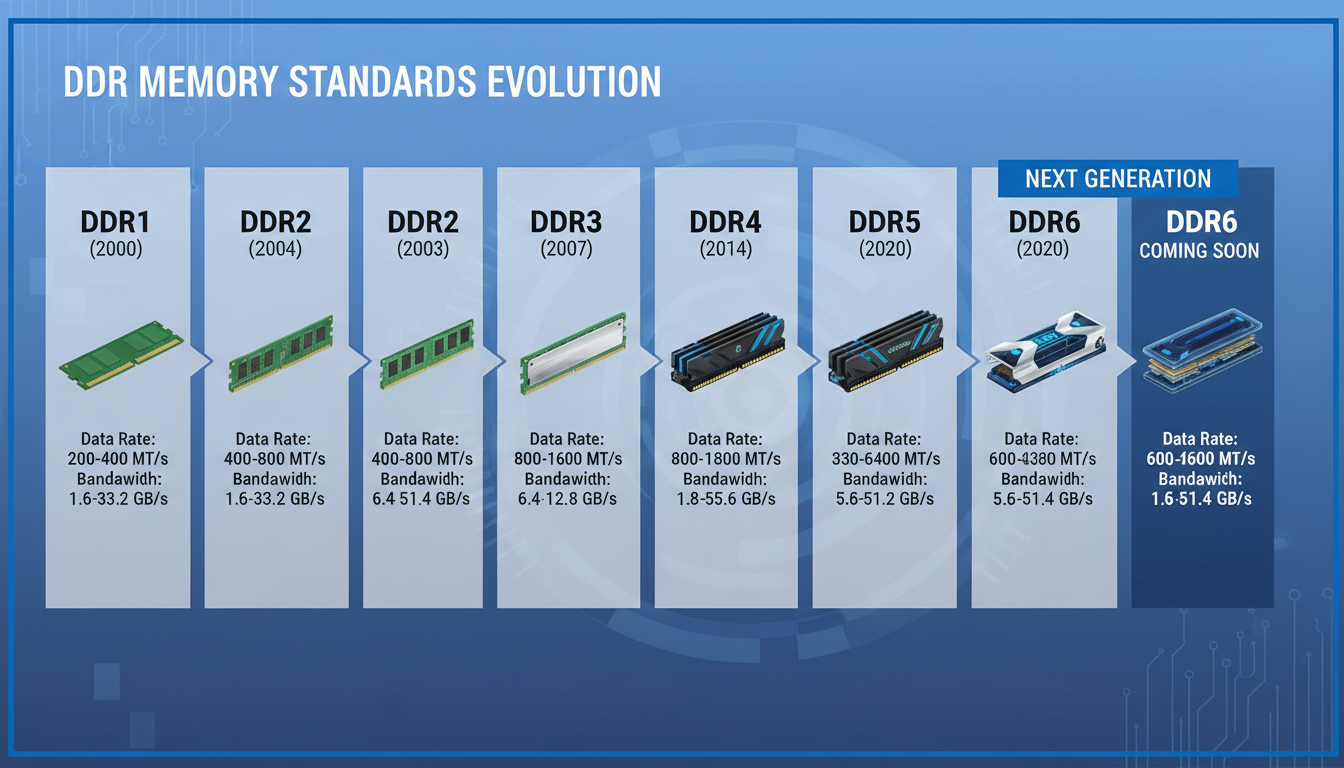
Historical progression of DDR memory standards showing performance scaling across generations
Breaking Memory Barriers: A Historical Perspective
Memory technology has undergone remarkable transformation since the introduction of the original DDR (Double Data Rate) standard in 2000. Each successive generation has pushed performance boundaries while introducing architectural innovations that fundamentally change how data moves through computing systems. DDR6 represents not just another step in this evolution, but a significant architectural leap designed to address emerging computational challenges that previous standards simply cannot handle.
Key Insight: DDR6 RAM represents more than a speed boost—it’s a fundamental redesign of memory architecture targeting AI workloads, real-time data processing, and computational demands that don’t yet exist in mainstream computing.
The Growing Importance of Memory Bandwidth
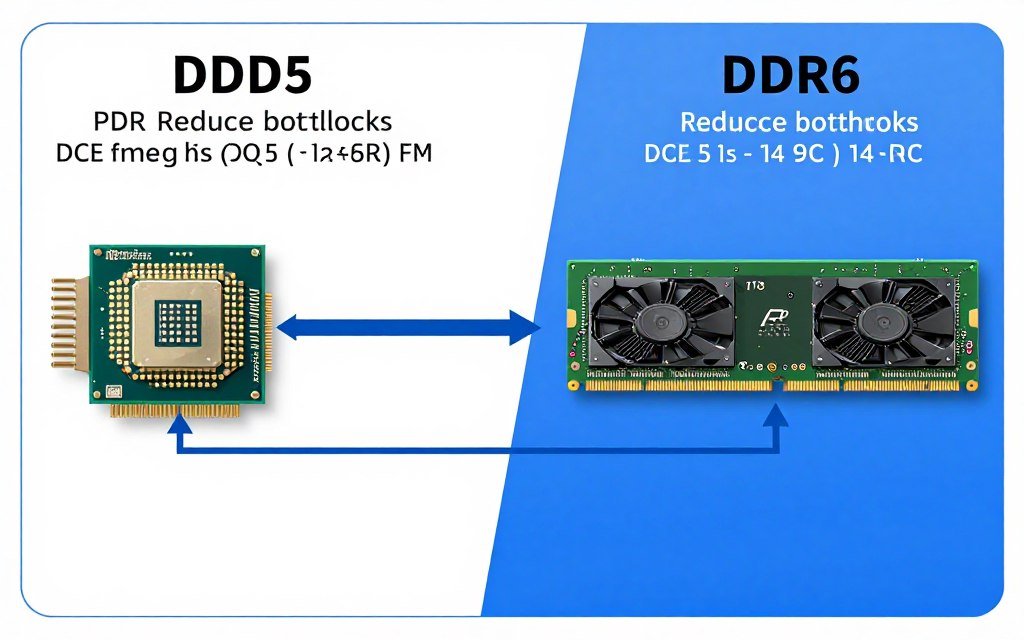
As processor core counts multiply and GPUs handle increasingly complex workloads, memory bandwidth has emerged as a critical performance bottleneck. Today’s computational tasks—particularly machine learning, 8K video editing, and next-generation gaming—demand not just raw CPU power but memory systems capable of feeding data at unprecedented rates. DDR6 directly addresses this challenge by dramatically increasing both bandwidth and efficiency while introducing new parallelism techniques.
Stay Ahead of Memory Technology Developments
Get exclusive updates on DDR6 standardization progress, manufacturer announcements, and early benchmark results delivered to your inbox.
DDR6 RAM Technical Specifications: The Numbers That Matter
Unprecedented Speed and Bandwidth
DDR6 RAM is projected to deliver extraordinary performance gains over its predecessor. While DDR5 currently reaches speeds of 6,400-8,400 MT/s (Mega Transfers per second), DDR6 targets an impressive 12,800 MT/s baseline with potential to reach 17,600 MT/s in its final specification. This translates to per-module bandwidth exceeding 134 GB/s—more than doubling what today’s fastest DDR5 modules achieve.
| Memory Standard | Initial Speed (MT/s) | Peak Speed (MT/s) | Module Bandwidth | Market Introduction |
| DDR4 | 2,133 | 3,200-5,333 | 25.6-42.7 GB/s | 2014 |
| DDR5 | 4,800 | 6,400-8,400 | 51.2-67.2 GB/s | 2021 |
| DDR6 | 8,800 | 12,800-17,600 | 102.4-140.8 GB/s | 2027 (Estimated) |
Revolutionary Architecture Changes
DDR6 RAM introduces revolutionary architectural innovations enabling its performance leap. The most significant change is the transition from DDR5’s 2×32-bit sub-channel design to a 4×24-bit sub-channel architecture. This quadrupled parallelism allows for significantly more simultaneous data operations, dramatically improving real-world bandwidth utilization and responsiveness.
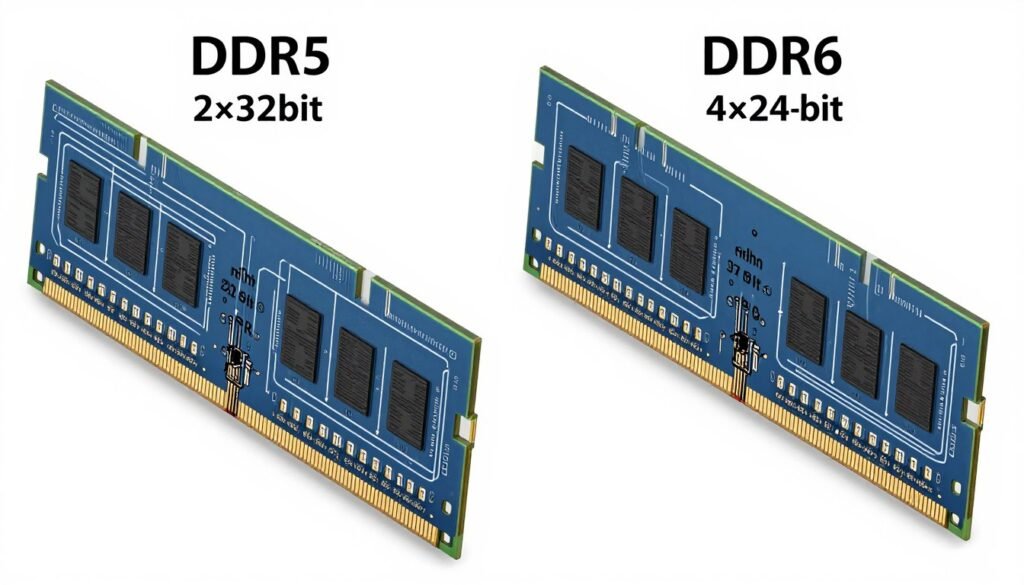
“The shift to a 4×24-bit sub-channel design represents the most significant architectural change in memory technology of the past decade. This approach fundamentally transforms how data moves through memory systems, enabling levels of parallelism previously impossible with traditional architectures.”
Beyond sub-channel architecture, DDR6 will feature an expanded bank count of 64 (doubling DDR5’s 32 banks), enabling more simultaneous operations and dramatically improved handling of complex memory access patterns. This increased bank count works synergistically with the sub-channel architecture to process more data operations in parallel, significantly reducing effective latency in real-world applications despite higher absolute latencies.
Power Efficiency Breakthroughs in DDR6 Technology
Advanced Voltage Management
Despite its substantial performance gains, DDR6 RAM is being engineered with remarkable power efficiency improvements. The standard is expected to operate at reduced voltage levels compared to DDR5, with sophisticated power management integrated circuits (PMICs) providing granular control over power delivery to individual memory subsystems. This targeted approach ensures power is allocated precisely where needed, reducing overall consumption.
DDR5 Power Profile
- Operating voltage: 1.1V standard
- Basic on-module power regulation
- Dual voltage rails (VDD/VDDQ)
- Limited power states available
DDR6 Power Profile
- Operating voltage: 0.9-1.0V target
- Advanced multi-domain power management
- Multiple optimized voltage domains
- Expanded adaptive power states
Thermal Efficiency Innovations
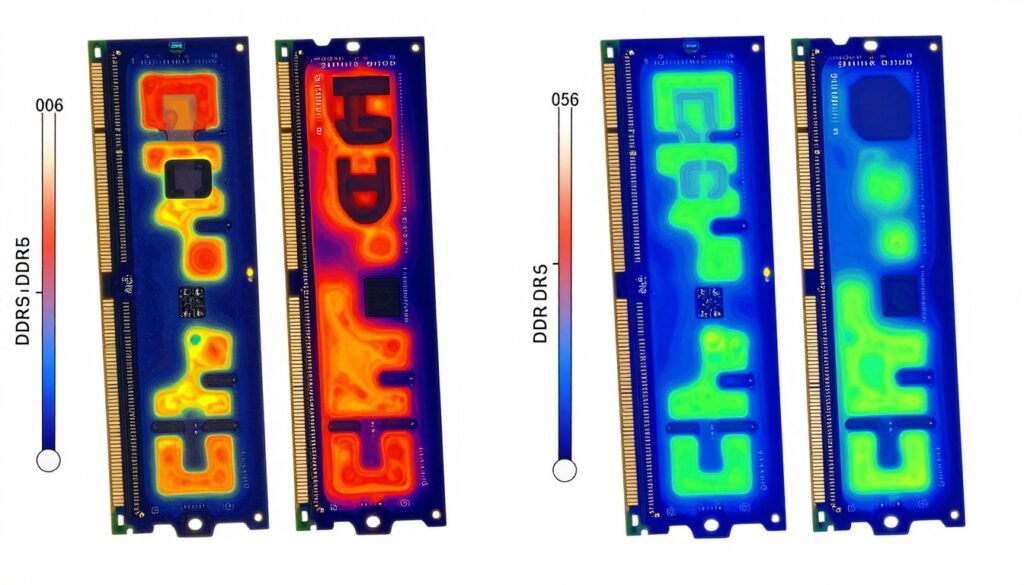
Higher data rates typically generate increased thermal output, but DDR6 RAM incorporates advanced thermal management techniques. The standard includes improved heat dissipation pathways, optimized component layouts, and intelligent thermal throttling algorithms that maintain performance while preventing overheating. These innovations enable sustained high-performance operation without excessive cooling requirements.
Why It Matters: Enhanced power efficiency means DDR6 RAM will be viable across a broader range of devices—from performance-focused desktop systems to battery-powered laptops and space-constrained mobile devices—while generating less heat under intensive workloads.
DDR5 vs DDR6: Making the Right Choice
Uncertain whether to invest in DDR5 now or wait for DDR6? Our comprehensive planning guide helps you make the right decision based on your specific needs, budget, and timeline.
- Detailed comparison of DDR5 and DDR6 capabilities
- Cost-benefit analysis for different user profiles
- Projected timeline for DDR6 adoption
- Upgrade path recommendations
Compatibility Requirements and Adoption Timeline
Platform Requirements for DDR6 Implementation
As with previous memory generation transitions, DDR6 RAM will necessitate entirely new hardware platforms with compatible memory controllers. This means new motherboards, chipsets, and processors will be required to leverage DDR6 technology. Both AMD and Intel will need to develop new CPU architectures with integrated DDR6 memory controllers before mainstream adoption can begin, creating a complete ecosystem transition.
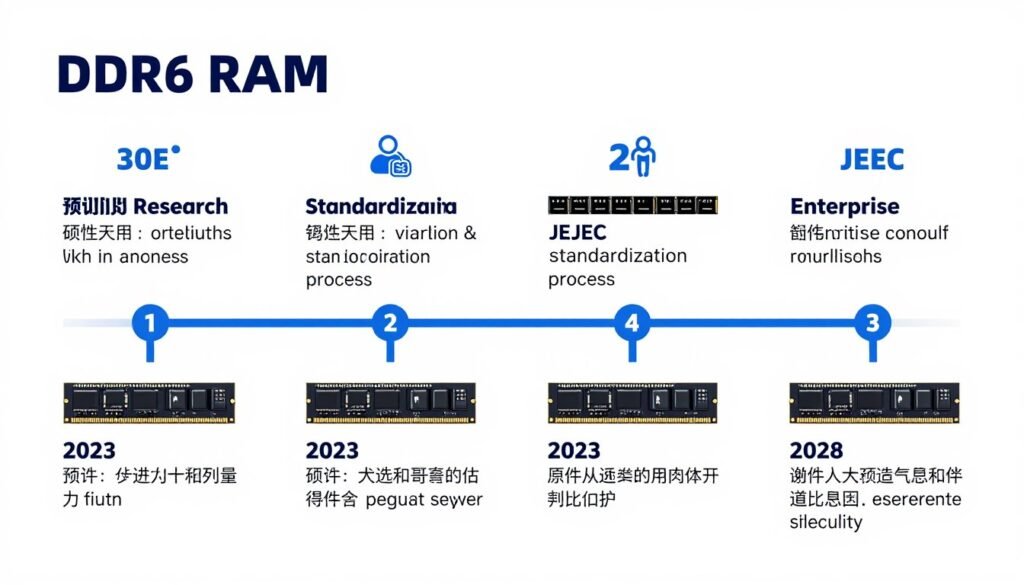
Projected DDR6 RAM development and market adoption timeline based on industry analysis
JEDEC Standardization and Development Process
The JEDEC Solid State Technology Association oversees memory technology standardization, including the upcoming DDR6 specification. This rigorous process involves multiple development phases, extensive testing, and industry-wide collaboration before finalizing the standard. For DDR6, this standardization process is expected to continue through 2025-2026, with initial products appearing in specialized markets by 2027.
Advantages of Waiting for DDR6
- Transformative performance improvements
- Superior future-proofing for emerging applications
- Better energy efficiency for all computing scenarios
- Enhanced capabilities for AI and data-intensive tasks
Disadvantages of Waiting
- Extended wait period (2+ years minimum)
- Premium pricing during initial availability
- DDR5 continues to mature and improve
- Current systems satisfy most present-day requirements
Real-World Performance Impact Across Computing Segments
Gaming Experience Transformation
Gaming represents a domain where memory bandwidth can significantly impact user experience, particularly for high-resolution, high-refresh-rate scenarios. DDR6 RAM will benefit games that stream massive asset libraries and texture data, potentially eliminating stuttering and improving frame time consistency in open-world environments and next-generation titles with complex simulation systems.
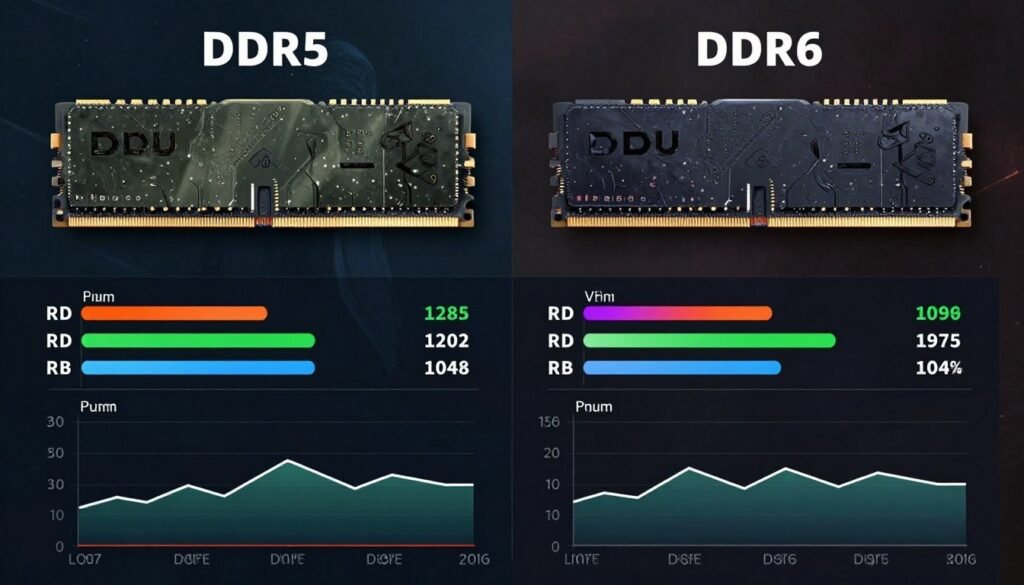
Key Insight: While all games will benefit from DDR6 RAM to some degree, the most dramatic improvements will be seen in titles specifically designed to leverage increased bandwidth, particularly those featuring procedurally generated worlds, advanced physics simulations, or sophisticated AI systems.
AI and Machine Learning Revolution
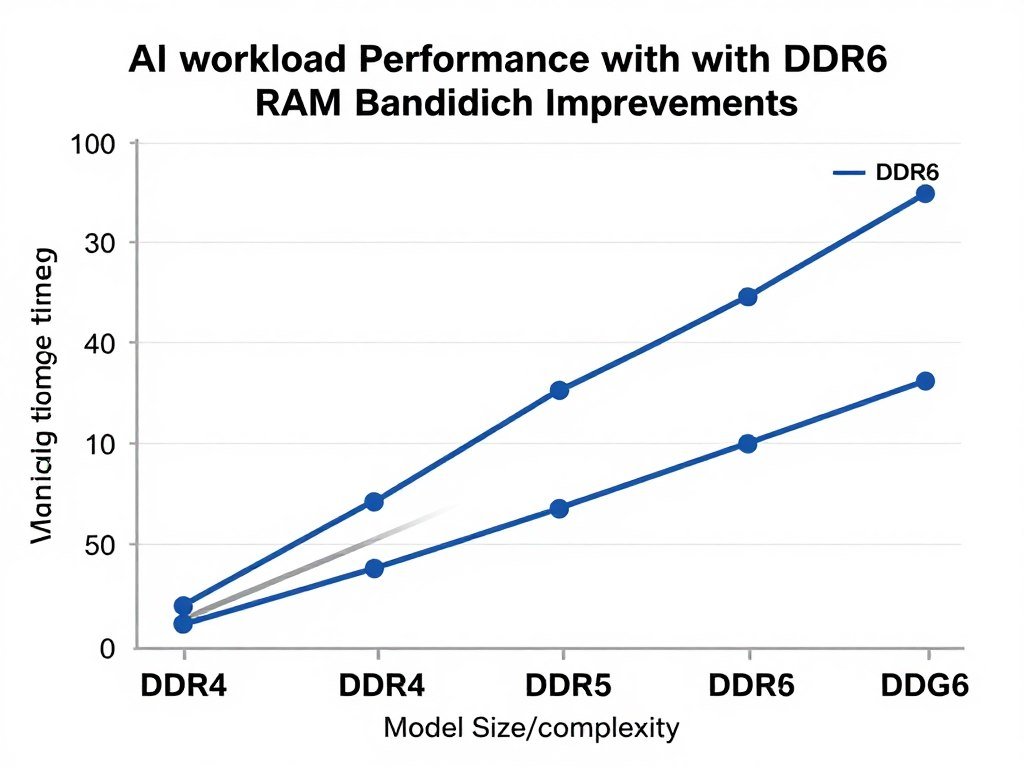
Perhaps the most profound impact of DDR6 RAM will be felt in artificial intelligence and machine learning applications. These workloads are exceptionally memory-bandwidth intensive, and the substantial throughput increase offered by DDR6 could dramatically accelerate training and inference operations for AI models, particularly in systems without access to specialized memory technologies like HBM (High Bandwidth Memory).
Enterprise and Data Center Transformation
In enterprise environments, memory bandwidth directly correlates with server performance and capacity. DDR6 RAM will enable higher-density memory configurations with substantially greater bandwidth, allowing more virtual machines per physical server, faster database operations, and improved performance for memory-intensive applications like in-memory databases, real-time analytics, and containerized microservices.
| Application Category | DDR5 Performance | Expected DDR6 Improvement | Primary Advantage |
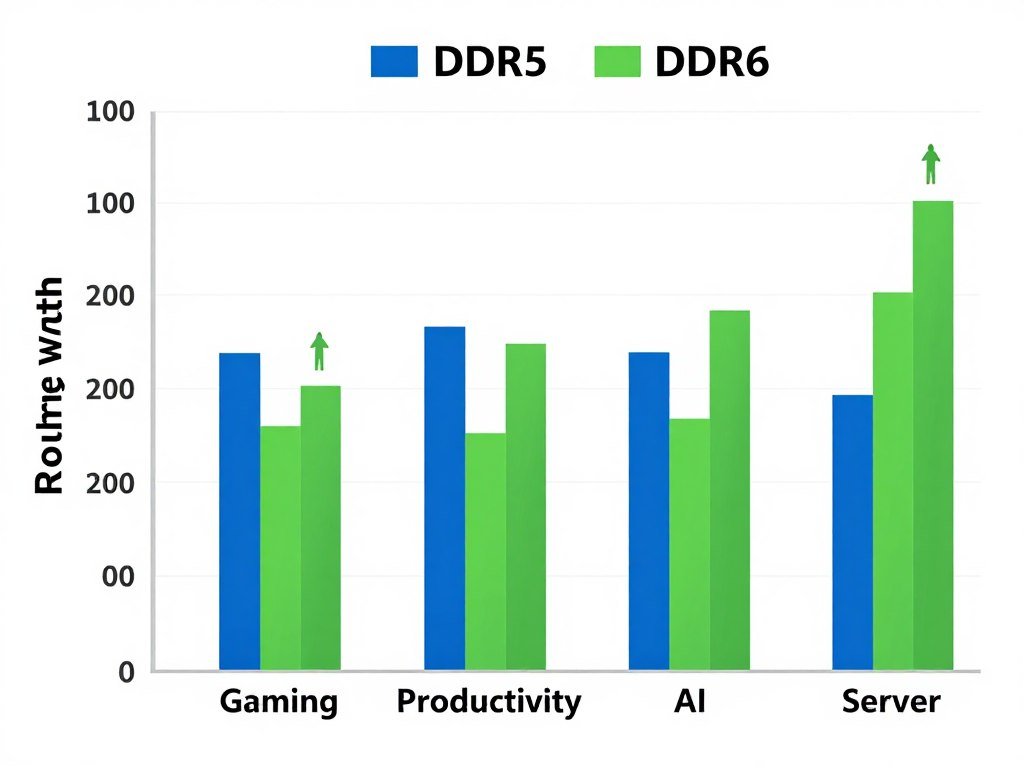
| Gaming | Sufficient for current titles | 15-25% in memory-bound scenarios | Consistent frame pacing, faster asset loading |
| Content Creation | Adequate for most workflows | 20-35% for memory-intensive tasks | Reduced rendering times, smoother previews |
| AI/ML Workloads | Limited with large models | 35-55% for training/inference | Faster model training, larger model support |
| Enterprise Computing | Current standard for deployments | 40-60% for memory-bound workloads | Higher VM density, faster database operations |
Memory Technology Roadmap Webinar
Join industry experts for an in-depth discussion of memory technology evolution, DDR6 development status, and how these advancements will impact different computing segments.
Form Factor Evolution: Beyond Traditional DIMMs
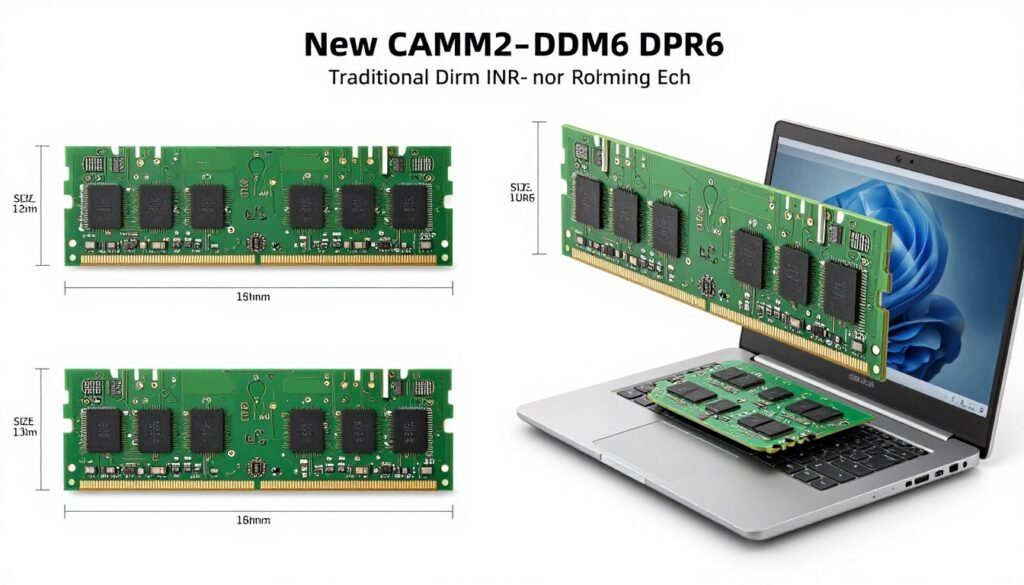
Comparison between traditional DIMM modules and the emerging CAMM2 form factor
Physical Limitations of Traditional DIMMs
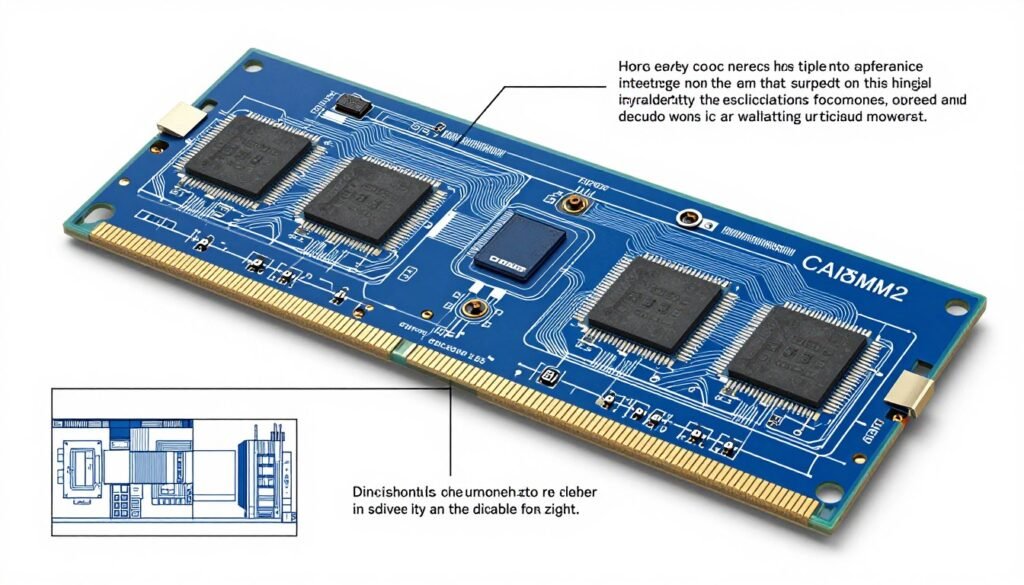
As memory speeds increase exponentially, traditional DIMM (Dual In-line Memory Module) form factors encounter fundamental physical limitations in signal integrity and trace routing. These challenges become particularly acute at the extreme speeds targeted by DDR6. To overcome these barriers, the industry is exploring alternative form factors like CAMM2 (Compression Attached Memory Module) that can better support DDR6’s unprecedented speeds while maintaining signal integrity.
CAMM2: Reimagining Memory Module Design
CAMM2 represents a significant departure from traditional memory module design philosophy, offering superior signal integrity at extreme speeds, potentially higher density in the same physical footprint, and improved thermal characteristics. This innovative form factor is expected to be particularly valuable for laptop implementations of DDR6, where space constraints make traditional DIMMs increasingly problematic.
“The physical constraints of traditional DIMM form factors become increasingly problematic as memory speeds exceed 10,000 MT/s. Novel approaches like CAMM2 aren’t just beneficial but essential to fully realize DDR6’s potential while maintaining signal integrity across increasingly complex memory subsystems.”
Enhanced ECC and Reliability Features in DDR6
Next-Generation Error Correction
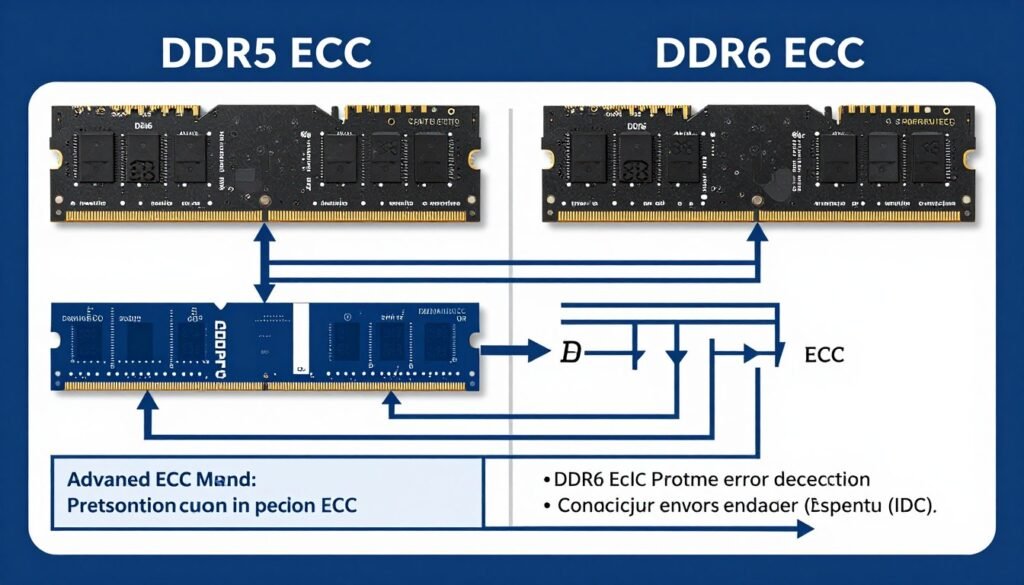
As memory densities increase and manufacturing processes shrink, error rates become a growing concern. DDR6 RAM introduces advanced Error Correction Code (ECC) capabilities that go beyond traditional implementations. The new standard incorporates on-die ECC for all memory modules—even non-ECC consumer variants—providing baseline protection against single-bit errors while maintaining full performance.
For enterprise applications, DDR6 offers enhanced ECC modes with significantly improved error detection and correction capabilities, including better protection against multi-bit errors that have become more common as memory density increases. These improvements ensure data integrity even in the most demanding 24/7 operation scenarios.
| ECC Feature | DDR4 Capability | DDR5 Capability | DDR6 Capability |
| On-die ECC | Not available | Basic implementation | Advanced implementation standard |
| Single-bit Error Correction | ECC modules only | ECC modules + limited on-die | All modules (consumer and ECC) |
| Multi-bit Error Detection | Limited (ECC modules) | Improved (ECC modules) | Comprehensive coverage |
| Address/Command Parity | Optional feature | Standard feature | Enhanced implementation |
Reliability Enhancements for Enterprise Computing
Beyond ECC improvements, DDR6 RAM incorporates several reliability enhancements critical for enterprise environments. These include advanced command/address parity protection, improved refresh algorithms that reduce vulnerability during refresh cycles, and enhanced RAS (Reliability, Availability, Serviceability) features that allow memory subsystems to gracefully handle potential failures without system crashes.
Why It Matters: As computing systems handle increasingly critical workloads and larger datasets, memory reliability becomes paramount. DDR6’s enhanced error protection ensures data integrity while maintaining performance, making it ideal for mission-critical applications where downtime is not an option.
Market Impact and Industry Transformation
Manufacturing Challenges and Solutions
The transition to DDR6 RAM presents significant manufacturing challenges. Producing memory modules capable of reliably operating at speeds approaching 17,600 MT/s requires advanced manufacturing processes, new materials, and innovative signal integrity solutions. Leading memory manufacturers are investing heavily in new fabrication technologies and testing methodologies to overcome these challenges.
Initial production costs for DDR6 modules will likely be substantially higher than mature DDR5 products, following the pattern of previous memory generation transitions. However, as manufacturing processes mature and volumes increase, these costs are expected to normalize within 12-18 months after introduction.
Competitive Landscape Transformation
The transition to DDR6 will reshape the competitive landscape among memory manufacturers. Companies that successfully navigate the technical challenges of DDR6 production early will gain significant market advantages. This transition period typically creates opportunities for smaller players to gain market share through innovation, while established leaders leverage their manufacturing scale and research capabilities.
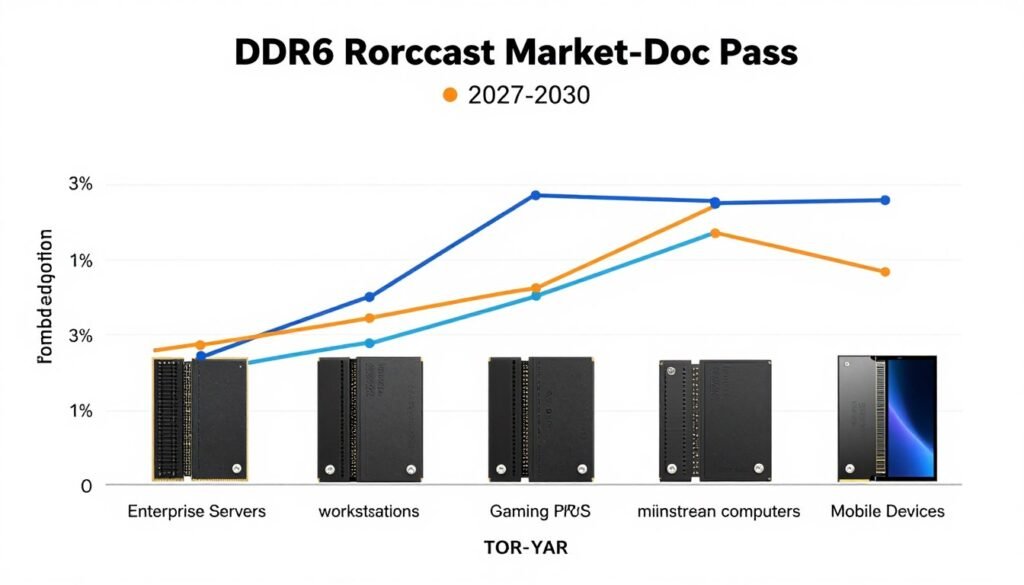
| Market Segment | Projected DDR6 Adoption Timeline | Key Adoption Drivers | Primary Challenges |
| Enterprise Servers | Early 2027 | Bandwidth demands, virtualization density | Validation requirements, system stability |
| Workstations | Mid 2027 | Content creation, simulation performance | Software optimization, cost premium |
| Gaming PCs | Late 2027 | Frame consistency, next-gen game requirements | Price sensitivity, platform availability |
| Mainstream PCs | 2028-2029 | Platform refresh cycles, price normalization | Value proposition, migration costs |
Signaling Innovations: Breaking Speed Barriers
Advanced Signal Integrity Solutions
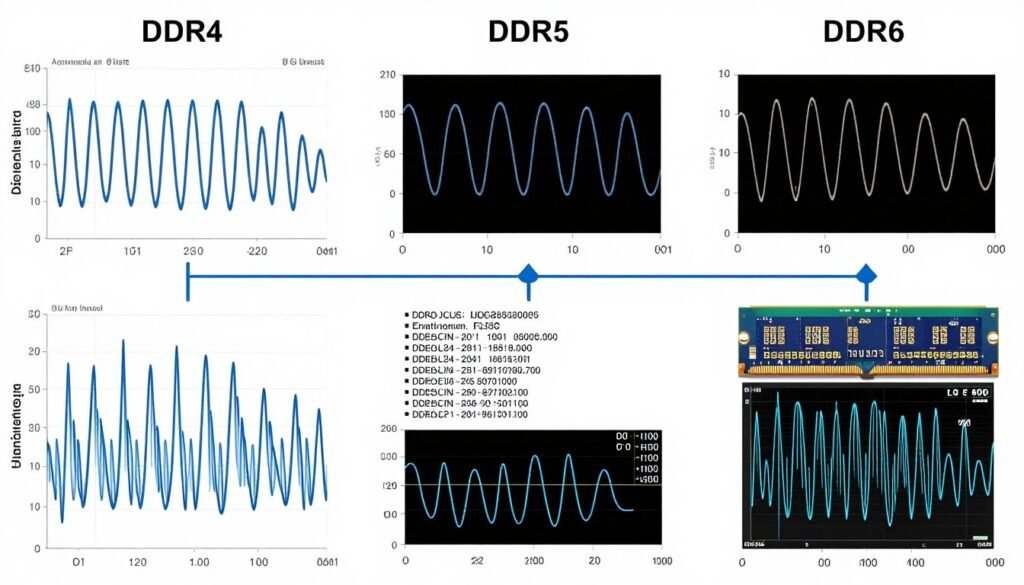
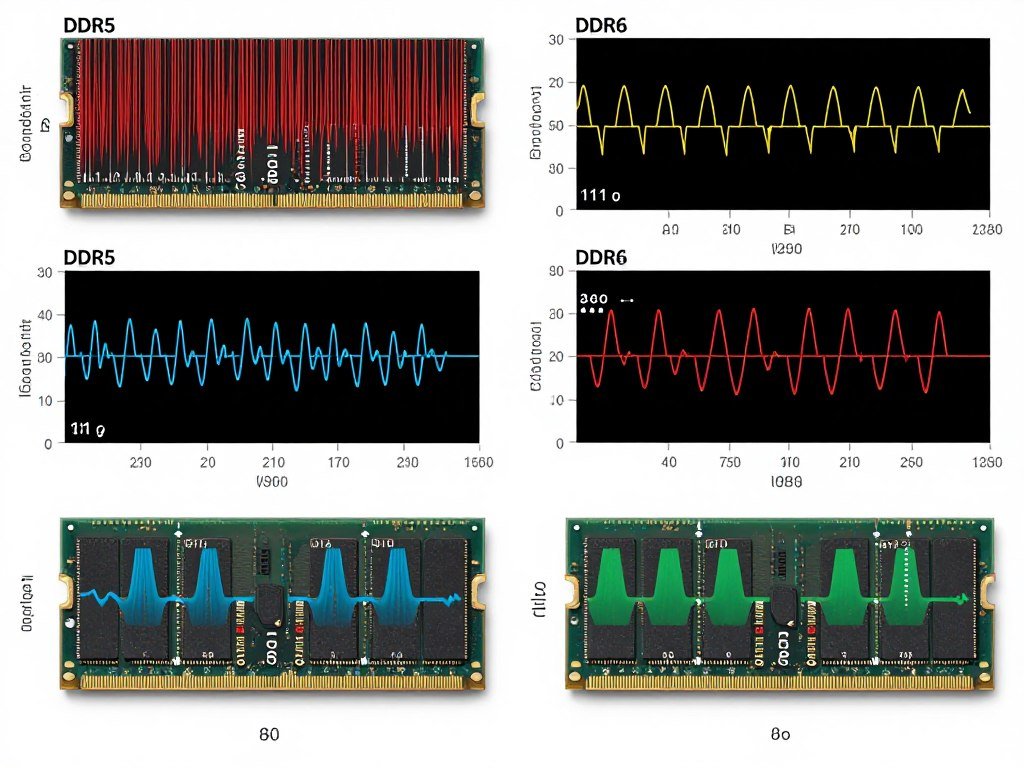
Achieving reliable data transfer at DDR6’s target speeds requires fundamental advancements in signal integrity. The new standard incorporates sophisticated signal conditioning techniques, including advanced equalization, enhanced termination schemes, and improved clock distribution networks. These innovations work together to maintain clean signal integrity even at the extreme speeds that DDR6 targets.
One key innovation is the implementation of decision feedback equalization (DFE) and feed-forward equalization (FFE) techniques that were previously found only in high-speed serial interfaces. These technologies allow DDR6 to overcome channel limitations that would otherwise make reliable operation at 12,800+ MT/s impossible.
Improved Clocking Architecture
DDR6 RAM introduces a significantly improved clocking architecture that reduces jitter and enhances timing margins. The new approach incorporates distributed clock networks with active skew compensation, allowing for more precise timing across the entire memory subsystem. This improved timing precision is essential for maintaining data integrity at DDR6’s unprecedented speeds.
Technical Insight: DDR6’s signaling innovations represent a fundamental shift in memory interface design, borrowing techniques from high-speed serial interfaces like PCIe and applying them to parallel memory buses. This hybrid approach enables the dramatic speed increases while maintaining backward compatibility with existing memory controller architectures.
Frequently Asked Questions About DDR6 RAM
When will DDR6 RAM become available for consumer computers?
Based on current industry projections, DDR6 RAM is expected to debut in enterprise systems around early 2027, with consumer availability following in late 2027 or early 2028. The exact timeline depends on JEDEC’s finalization of the standard and processor manufacturers’ integration of DDR6 controllers into their platforms. Initial availability will likely be limited to high-end systems before mainstream adoption begins.
Will DDR6 RAM work with existing DDR5 motherboards?
No, DDR6 RAM will not be compatible with DDR5 motherboards or processors. Like previous memory generation transitions, DDR6 will require entirely new motherboards with compatible memory controllers and CPU architectures specifically designed to work with the new memory standard. This incompatibility stems from fundamental differences in signaling, voltage requirements, and physical interface design between the generations.
How much faster will DDR6 RAM be compared to current DDR5?
DDR6 RAM is projected to deliver approximately double the bandwidth of DDR5. While current DDR5 modules typically operate between 4,800-8,400 MT/s, DDR6 is targeting speeds between 12,800 MT/s and 17,600 MT/s. This translates to memory bandwidth exceeding 140 GB/s per module compared to DDR5’s maximum of about 67 GB/s. Real-world performance gains will vary by application, with memory-intensive workloads seeing the most significant improvements.
Will DDR6 RAM significantly improve gaming performance?
Gaming performance improvements with DDR6 RAM will vary significantly by title. Games that are currently memory bandwidth-constrained may see noticeable improvements, particularly in scenarios involving large open worlds, high-resolution texture streaming, or complex AI systems. However, many games are more limited by GPU or CPU performance than memory bandwidth, so the impact won’t be universal across all titles. Next-generation games designed with DDR6’s capabilities in mind will likely show the most substantial benefits.
Should I wait for DDR6 RAM before upgrading my system?
For most users, waiting specifically for DDR6 RAM (expected in 2027-2028) is impractical if you need a system upgrade now. DDR5 systems will remain relevant for many years, and the DDR6 transition will require new motherboards and processors. If your current system meets your needs, you could wait, but if you need an upgrade in the next 1-3 years, a DDR5 system would be the practical choice. Consider your specific performance requirements, budget constraints, and how long you can reasonably continue using your current system.
What is JEDEC and how does it relate to DDR6 RAM development?
JEDEC (Joint Electron Device Engineering Council) is the industry organization responsible for developing open standards for microelectronics, including memory technologies. JEDEC defines the official specifications for DDR memory, including the upcoming DDR6 standard. The organization brings together memory manufacturers, chipset designers, and system integrators to create standardized specifications ensuring compatibility across different platforms and devices. JEDEC’s standardization process for DDR6 involves multiple technical committees, prototype testing, and industry-wide consensus before finalizing the specification.
Will DDR6 RAM consume more power despite offering higher performance?
While DDR6 RAM will deliver substantially higher performance, it’s being designed with improved power efficiency as a primary goal. The standard is expected to operate at lower voltages than DDR5 (potentially 0.9-1.0V compared to DDR5’s 1.1V) and will include more sophisticated power management features. This means that while absolute power consumption might increase under full load due to higher data rates, the efficiency (performance per watt) should improve significantly. DDR6 modules will likely incorporate more granular power states, allowing unused portions of memory to enter ultra-low power modes when not actively being accessed.
How will DDR6 RAM impact data center operations?
DDR6 RAM will have a transformative impact on data center operations through several key benefits: (1) Higher memory bandwidth will enable more virtual machines per physical server, improving infrastructure utilization; (2) Enhanced memory density will allow more data to be kept in-memory, accelerating database operations and analytics; (3) Improved power efficiency will reduce energy consumption and cooling requirements; (4) Advanced reliability features will decrease system downtime due to memory errors. These improvements will enable data centers to handle larger workloads with fewer physical servers, potentially reducing total cost of ownership despite the initial premium for DDR6 technology.
Conclusion: Preparing for the DDR6 Memory Revolution
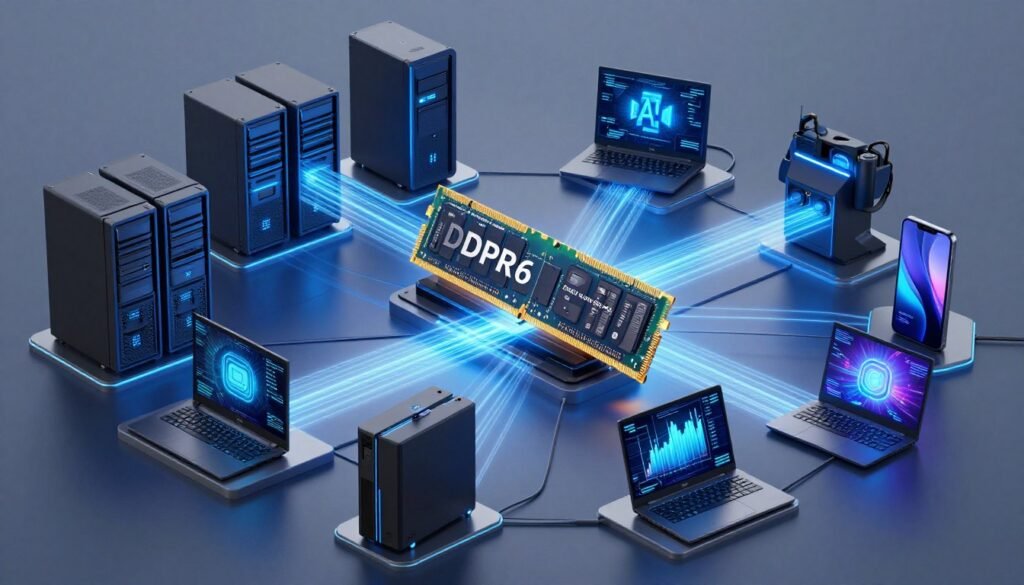
DDR6 RAM represents a monumental leap forward in memory technology, promising to deliver the bandwidth, efficiency, and reliability needed for next-generation computing applications. With speeds potentially reaching 17,600 MT/s and architectural innovations like 4×24-bit sub-channels and 64 memory banks, DDR6 will help eliminate memory bottlenecks in demanding workloads from AI development to immersive gaming experiences.
While mainstream adoption remains several years away, understanding DDR6’s capabilities and timeline helps both technology enthusiasts and IT professionals make informed decisions about current and future system investments. Whether you’re planning a high-performance workstation, gaming system, or enterprise deployment, the DDR6 revolution will eventually transform what’s possible in computing performance across all segments.
Final Perspective: DDR6 RAM represents more than just another iterative memory upgrade—it’s a fundamental redesign that will help enable the next generation of computing experiences, from more immersive virtual worlds to more capable AI systems and more efficient data centers. The question isn’t if you’ll eventually use DDR6, but when and how you’ll leverage its capabilities.
Stay at the Forefront of Memory Technology
Join our community of technology professionals and enthusiasts to receive exclusive updates on DDR6 development, early benchmarks, and strategic insights to help you plan your technology roadmap.